
Choosing among the 10 Best Neutral Earthing Transformer Suppliers requires more than comparing prices. A reliable Neutral Earthing Transformer must control fault current, withstand thermal stress, and protect personnel during abnormal conditions. Its design also affects relay sensitivity, grounding resistance, and generator stability.
The IEA’s Electricity 2024 report highlights continued electricity-demand growth and expanding grid investment. The U.S. Department of Energy’s National Transmission Needs Study also identifies increasing pressure on transmission reliability. These trends make grounding equipment increasingly important. However, global demand does not prove that every supplier offers equal engineering quality.
IEEE Std 32 and IEC 60076-6 provide useful technical references for evaluating earthing transformers, neutral terminals, insulation levels, and short-time current performance. Dr. P. M. Anderson, a respected power-system fault-analysis specialist, emphasizes a principle often summarized as: “Grounding design must be judged by fault current and system behavior, not appearance.” That warning remains practical.
A serious supplier should provide zero-sequence impedance data, thermal withstand calculations, routine-test records, and clear installation guidance. Site experience matters too. A transformer may look excellent on paper, yet perform poorly with unsuitable relay settings or weak maintenance support. That is the uncomfortable part.
This guide compares ten suppliers through engineering capability, certification, customization, delivery reliability, and after-sales service. Rankings are not universal. Project voltage, neutral grounding method, climate, and local standards can change the result. Buyers should verify every claim against test reports, references, and the actual network fault study.
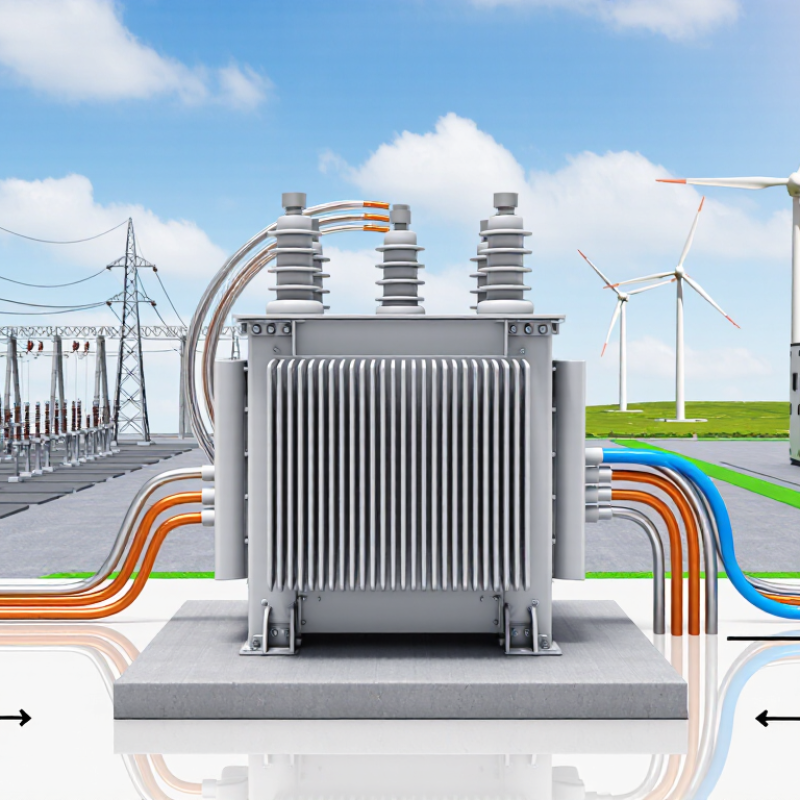
A neutral earthing transformer creates an artificial neutral point for a power system without a naturally grounded neutral. It is commonly connected to delta networks through a zigzag or grounding transformer design. This arrangement gives fault current a controlled path to earth.
During a phase-to-ground fault, the transformer limits current while allowing protective relays to detect the event. Without this path, fault protection may respond slowly, and transient voltages can stress insulation. The grounding resistor is selected carefully. Too much resistance may weaken protection signals, while too little can increase thermal and mechanical damage.
In substations and industrial facilities, engineers assess system voltage, fault duration, grounding method, and available space. A reliable supplier should provide verified calculations, thermal ratings, routine test records, and clear installation guidance.
Enclosure quality also matters, especially in dusty or humid environments. Cable terminals should remain accessible for inspection.
Small details matter.
Field experience shows that incorrect neutral grounding calculations often appear only during commissioning. That is an expensive lesson. Protection coordination must be checked with actual relay settings, not only software assumptions. Supplier documentation should explain impedance tolerance, cooling requirements, maintenance intervals, and emergency limits. No design is perfect; unusual harmonics, repeated faults, or future load changes may expose weaknesses that the original specification overlooked.
It creates an artificial neutral point in systems without a naturally grounded neutral. It often connects to delta networks.
It provides a controlled path for phase-to-ground fault current. Protective relays can then detect faults more reliably.
Too much resistance may weaken protection signals. Too little resistance can increase thermal and mechanical damage.
Review system voltage, fault current, fault duration, altitude, ambient temperature, and installation space. Cable length also matters.
Check rated power, impedance, insulation level, cooling method, and zero-sequence impedance. Verify winding resistance and temperature limits.
Request calculation sheets, guaranteed losses, test records, drawings, and installation guidance. Documentation should explain tolerances and emergency limits.
Review winding resistance, ratio, insulation, applied-voltage, impulse, and partial-discharge tests. Short-time current verification is also important.
Speak with operators from similar applications. Check delivery accuracy, commissioning support, spare parts, warranty response, and change-control procedures.
Dusty or humid sites need suitable enclosures and corrosion protection. Cable terminals should remain accessible for inspection.
Yes. Harmonics, repeated faults, or future load changes may expose overlooked assumptions. Brochures alone are not enough.
A Neutral Earthing Transformer is an essential component in many electrical systems, providing a controlled neutral point and helping limit fault currents during line-to-ground failures. This article explains its operating purpose, common applications, and the role it plays in improving system protection, stability, and safety. It also outlines how to evaluate suppliers by reviewing product quality, engineering capabilities, manufacturing standards, testing procedures, technical support, delivery reliability, and after-sales service.
The guide compares key specifications such as rated power, voltage, impedance, insulation level, cooling method, enclosure design, fault-current capacity, and installation requirements. It presents ten leading categories of global suppliers without focusing on specific brand names, helping readers understand what distinguishes reliable manufacturers. Finally, the article offers practical advice for selecting the right supplier based on system voltage, operating environment, project budget, compliance requirements, customization needs, and long-term maintenance considerations.