
China has become a major manufacturing base for Medical Isolation Transformer systems used in hospitals, clinics, operating rooms, and diagnostic facilities. However, choosing a supplier requires more than comparing factory prices or product photographs. Electrical safety depends on insulation quality, leakage-current control, shielding, thermal performance, and consistent production testing.
Professor James Reason, a leading safety researcher, wrote, “We cannot change the human condition, but we can change the conditions under which humans work.” This principle applies directly to medical power systems. A dependable transformer should reduce electrical risk, support stable equipment operation, and fit the hospital’s real installation conditions. Small details matter. Copper winding quality matters. Monitoring accuracy matters. So does the alarm response at three in the morning.
This guide examines China’s leading Medical Isolation Transformer manufacturers through practical purchasing criteria. These include ISO-certified production, IEC 60601-1 awareness, routine dielectric testing, insulation monitoring compatibility, customization ability, documentation, and after-sales support. Factory experience also deserves attention. Some suppliers produce large volumes but provide limited engineering guidance. Others offer strong technical support but have narrower product ranges.
The market is not perfectly transparent. A polished website does not prove reliable performance. A low quotation may conceal weaker materials, unclear testing, or incomplete certification support. Buyers should request test reports, wiring diagrams, sample units, and project references before making a decision. No manufacturer is perfect. Even experienced buyers can overlook installation conditions, load growth, or maintenance access. Careful comparison remains essential.
What Is a Medical Isolation Transformer?
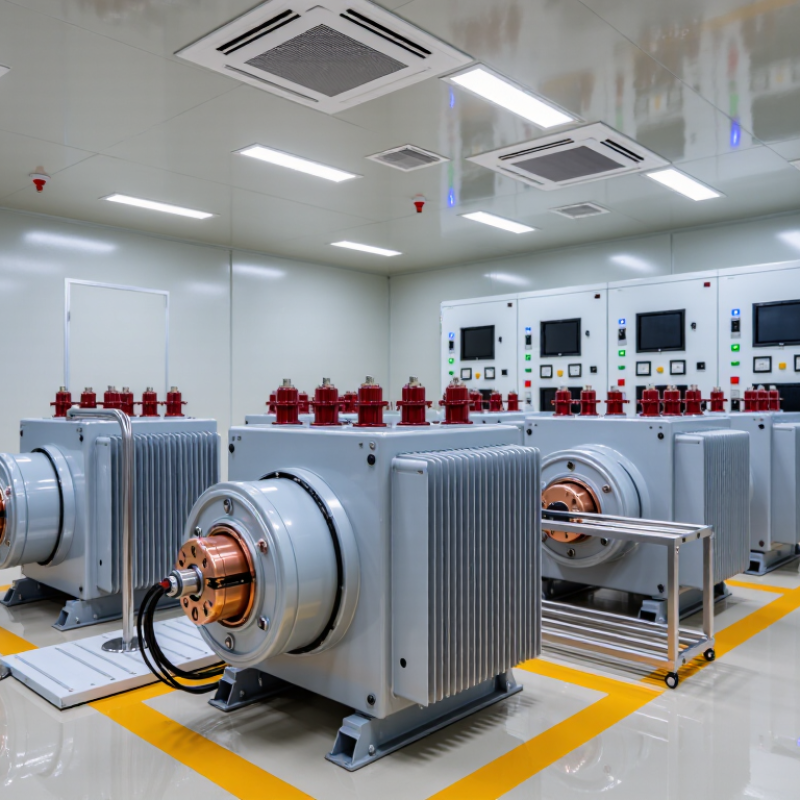
A medical isolation transformer separates clinical equipment from the main electrical supply. It uses electromagnetic induction instead of a direct conductive connection. This design limits leakage current and reduces shock risks around patients. In operating rooms, intensive care units, and treatment areas, even tiny currents can matter. The transformer usually supplies several connected devices through an isolated circuit. A monitoring system can also track insulation resistance and warn staff about faults.
From practical installation experience, correct sizing is essential. Engineers review the equipment load, startup current, ventilation, and room conditions. An undersized transformer may overheat or trigger unwanted alarms. An oversized unit can waste space and energy. The transformer does not remove every electrical hazard. Poor grounding, damaged cables, or incorrect maintenance can still create danger. This point is sometimes overlooked. Qualified professionals should inspect the system regularly and follow applicable medical electrical standards.
Tips: Check the power rating before connection. Keep ventilation openings clear. Test alarm functions during scheduled maintenance. Record unusual noise, heat, or repeated warnings. Do not treat isolation as a substitute for professional inspection. A quiet transformer is not always a healthy transformer.
Medical isolation transformers protect patients by separating clinical equipment from the main electrical supply. This galvanic separation limits dangerous fault currents during an initial insulation failure. In an intensive care room, that extra margin matters. A patient may be connected to several devices at once, including monitors, pumps, and ventilators.
The transformer also helps reduce leakage current and common-mode electrical noise. Lower leakage can support safer connections near invasive patient circuits. However, it does not make defective equipment safe. Protection depends on correct insulation, grounding, circuit design, and regular testing. An insulation monitoring device should detect the first fault and provide a clear audible and visual alarm. Staff must recognize that alarm quickly.
Equipment benefits too. Stable separated power can reduce interference and unexpected shutdowns. Sensitive displays may show fewer disturbances during switching events. Yet protection is not unlimited. A transformer cannot replace surge protection, overload protection, or preventive maintenance.
Its rating must match the connected load, including temporary startup current. A practical inspection should check heat, noise, terminal tightness, insulation resistance, and alarm operation. Small faults can become serious. Installers should follow applicable medical electrical standards and document every test.
One uncomfortable truth remains: a well-designed transformer can still fail when maintenance records are ignored or staff silence repeated alarms.
Key Standards for Medical Isolation Transformers in China
Medical isolation transformers in China must support patient safety, not merely reduce voltage noise. The China Health Statistics Yearbook 2023 recorded more than 36,000 hospitals in 2022. That scale makes consistent electrical protection essential. The WHO and World Bank report Energizing Health also estimated that over one billion people rely on health facilities without reliable electricity. Hospitals cannot treat isolation power as a decorative upgrade.
The main technical reference is GB/T 19212.16, aligned with IEC 61558-2-15 for transformers serving medical locations. Designers should also review GB/T 16895.24, based on IEC 60364-7-710. These standards address insulation, temperature rise, protective separation, and medical IT systems. A compliant project should verify the insulation monitoring device, alarm response, leakage current, and short-circuit protection. Certification alone is not enough.
During commissioning, technicians should record winding temperature, insulation resistance, and alarm thresholds under realistic load. Operating rooms need clear local alarms, accessible test buttons, and stable output during transfer events. Some specifications still focus too heavily on rated capacity. That is a weakness. Harmonic currents, ventilation, and future equipment loads can change actual performance. China’s applicable GB edition should be confirmed through the current national standards catalogue before procurement.
Evaluating China’s medical isolation transformer manufacturers requires more than comparing prices. Start with documented compliance. IEC 60601-1 and IEC 61558-2-15 address safety, insulation, leakage current, and transformer performance. Ask for recent type-test reports, factory quality records, and traceable component certificates. A polished certificate is not enough.
WHO’s Global Patient Safety Action Plan notes that about one in ten patients experiences harm during healthcare delivery. This makes leakage-current control a practical hospital concern, not a marketing phrase. During evaluation, request measured values under normal and overload conditions. Check whether testing covers temperature rise, dielectric strength, noise, and insulation resistance. Watch the meter readings. Small details matter.
A reliable supplier should explain its manufacturing process clearly. Review copper grade, winding method, shielding structure, resin treatment, and burn-in procedures. Ask for sample units from normal production, not specially prepared samples. Independent inspection can verify output voltage, efficiency, and alarm-system compatibility. Some suppliers provide excellent prototypes but inconsistent batches. That weakness is easy to miss.
Market research reports show continued growth in global medical equipment spending, increasing pressure on hospitals to control lifecycle costs. However, a lower purchase price may hide weak testing, poor documentation, or difficult maintenance. Evaluate warranty response times, spare-part availability, production capacity, and change-control procedures. Factory visits help, although one visit cannot prove long-term reliability. Use repeated audits and field feedback.
| Evaluation Dimension | What to Verify | Evidence or Technical Data Required | Practical Evaluation Benchmark | Weight | Score |
|---|---|---|---|---|---|
| Applicable Standards | Whether the product design and testing address medical electrical equipment requirements. | Current test reports and declarations referencing IEC 60601-1 where applicable, together with the relevant transformer safety standard, such as IEC 61558-2-15. | Full traceability between the offered model, test report, rated configuration, and applicable standard edition. | 15% | __/5 |
| Electrical Isolation | Primary-to-secondary separation, insulation system, dielectric withstand, and protective separation. | Rated input and output voltage, insulation class, dielectric-strength test voltage and duration, creepage and clearance information. | Parameters are clearly stated on the datasheet and are consistent with the intended medical installation and applicable safety standard. | 15% | __/5 |
| Leakage and Touch Current | Risk of leakage current affecting patients, operators, and connected medical equipment. | Routine-test records, leakage-current test method, protective-earth continuity results, and production test limits. | Documented test procedures exist for every production unit or defined sampling plan, with records available for audit. | 15% | __/5 |
| Power Rating and Voltage | Compatibility with the healthcare facility’s supply and connected load. | Rated apparent power in VA or kVA, input/output voltage, frequency, overload capability, voltage regulation, and inrush-current data. | Capacity is selected after allowing for continuous load, peak load, motor or capacitive inrush, and future expansion. | 10% | __/5 |
| Medical IT-System Compatibility | Suitability for isolated power systems used in locations such as operating rooms and intensive-care areas. | Compatibility information for insulation monitoring devices, line-isolation monitors, alarms, overcurrent protection, and system grounding arrangements. | The supplier provides a complete wiring diagram and confirms compatibility with the project’s medical IT-system architecture. | 10% | __/5 |
| Thermal Performance | Temperature rise, cooling method, duty cycle, and operation under the specified ambient conditions. | Temperature-rise test results, insulation thermal class, ambient-temperature range, thermal protection method, and derating curve if applicable. | Thermal data is supported by testing rather than only a nominal power rating; protection devices are identified and replaceable where applicable. | 10% | __/5 |
| Noise and Vibration | Acoustic suitability for patient rooms, operating rooms, diagnostic areas, and other noise-sensitive locations. | Sound-pressure or sound-power test conditions, transformer construction, mounting recommendations, and vibration-control provisions. | Noise is measured under a defined load and distance; installation guidance addresses resonance, ventilation, and enclosure mounting. | 8% | __/5 |
| Manufacturing Quality | Consistency of winding, insulation, assembly, testing, and final inspection. | Quality-management certification, incoming-material controls, winding records, calibration certificates, process inspection records, and final-test reports. | Production controls are documented, measuring equipment is calibrated, and serial-number traceability is available from materials to shipment. | 8% | __/5 |
| Customization Capability | Ability to supply project-specific voltage, frequency, enclosure, terminals, alarms, shielding, and mounting options. | Approved drawings, engineering-change procedure, prototype process, sample approval records, and bill-of-material control. | Custom specifications are confirmed in a controlled drawing and are not handled only through informal quotations or verbal communication. | 5% | __/5 |
| Documentation and Traceability | Completeness and accuracy of documents supplied for procurement, installation, commissioning, and maintenance. | Datasheet, installation manual, wiring diagram, inspection certificate, test report, packing list, serial-number record, and maintenance instructions. | Documents identify the exact model and revision, use consistent ratings, and are available in the language required by the project. | 5% | __/5 |
| After-Sales Support | Availability of technical assistance, spare parts, warranty handling, and failure analysis. | Warranty terms, response-time commitment, troubleshooting procedure, replacement-part list, service contacts, and nonconformity process. | Support responsibilities, escalation contacts, warranty exclusions, and expected response times are stated in writing before purchase. | 4% | __/5 |
| Export and Compliance Readiness | Ability to support the destination country’s import, electrical, and healthcare-project requirements. | Commercial invoice data, packing specifications, country-of-origin information, export documents, applicable conformity documents, and customs codes. | The supplier can provide consistent shipping and compliance documentation for the destination market before mass production. | 5% | __/5 |
China’s medical isolation transformer manufacturers serve hospitals, clinics, imaging rooms, and laboratory environments. Their strongest advantage is production flexibility. Many factories can adjust voltage, frequency, enclosure size, and connection layouts for different medical projects.
Experienced manufacturers usually focus on low leakage current, stable insulation, and electrostatic shielding. These features help reduce electrical noise near sensitive monitors and diagnostic equipment. Some production lines use vacuum impregnation to improve coil insulation and reduce moisture risks. Factory testing may include dielectric strength, insulation resistance, temperature rise, and leakage current checks. Ask for traceable test records. They matter.
Customization is another practical strength. Engineers can design compact units for equipment rooms or larger systems for complete clinical departments. Some suppliers also provide isolation monitoring interfaces, alarms, and installation guidance. However, quality is not uniform. A polished website does not prove reliable engineering. Documentation may be incomplete, and delivery promises can be optimistic. Buyers should review drawings, inspection procedures, material specifications, and after-sales response before placing an order. A site audit or independent inspection adds useful evidence. Small details often reveal manufacturing discipline.
It separates clinical equipment from the main electrical supply. Power transfers through electromagnetic induction, not direct conduction. This can limit leakage current near patients.
It limits fault current during an initial insulation failure. This matters in intensive care rooms. Patients may connect to monitors, pumps, and ventilators simultaneously.
No. It cannot correct damaged cables, poor grounding, or defective equipment. Surge protection, overload protection, and regular inspections remain necessary.
It checks insulation resistance in the isolated circuit. A first fault can trigger visual and audible alarms. Staff should respond quickly and record the event.
Engineers should review connected load, startup current, ventilation, and room conditions. An undersized unit may overheat or create repeated alarms. An oversized unit wastes space and energy.
Monitors, pumps, ventilators, and sensitive diagnostic equipment can benefit. Separated power may reduce interference and unexpected shutdowns. The improvement is useful, but not guaranteed.
Check temperature, unusual noise, terminal tightness, and insulation resistance. Test alarm functions during scheduled maintenance. Keep ventilation openings clear. A quiet transformer is not always healthy.
Request drawings, material details, and traceable test records. Factory tests may include leakage current, insulation resistance, and temperature rise. A polished website proves very little. Independent inspection can reveal overlooked weaknesses.
A Medical Isolation Transformer is a specialized power device designed to separate medical equipment from the main electrical supply while maintaining stable and reliable energy delivery. In healthcare environments, it helps reduce leakage-current risks, limit electrical interference, and protect both patients and sensitive equipment. Its value is especially important in operating rooms, intensive care units, diagnostic areas, and other locations where power continuity and electrical safety are critical.
This article explains the key design features and performance requirements of medical isolation transformers, including insulation quality, monitoring functions, temperature control, overload protection, and system reliability. It also introduces the standards and certification considerations commonly applied in China and provides practical guidance for evaluating local manufacturers. Buyers should compare technical capability, production quality, testing procedures, customization support, delivery reliability, and after-sales service. The final section summarizes the typical strengths of leading Chinese manufacturers, helping hospitals, engineering contractors, and distributors make informed purchasing decisions based on safety, performance, compliance, and long-term value.