
As electricity demand rises across data centers, factories, transport networks, and renewable projects, transformer selection has become a practical risk decision. The International Energy Agency’s Electricity 2024 report expects global electricity demand to grow by about 4% annually through 2026. This growth will require dependable equipment that can operate across varied climates, building types, and maintenance conditions. An Air Cooled Transformer offers a strong option where fire safety, indoor installation, and reduced fluid management matter. It uses air instead of liquid insulation, which can simplify site planning and reduce concerns about oil leakage.
The technology also supports global projects with flexible installation requirements. IEC 60076-11 defines key requirements for dry-type transformers, including thermal performance, insulation, and testing. On a real project, engineers may place a unit beside a production line, inside a commercial building, or near sensitive electrical rooms. Temperature sensors can help operators monitor winding conditions during heavy loads. Less routine fluid inspection can also support leaner maintenance programs. That sounds straightforward.
It is not perfect. Air cooled designs may require more physical space, produce audible fan noise, and face derating at high altitude or in dusty environments. The U.S. Department of Energy continues to emphasize transformer efficiency because losses accumulate throughout long operating lives. Therefore, choosing the right Air Cooled Transformer requires more than comparing purchase prices. Engineers should review load profiles, ventilation, ambient temperature, harmonics, acoustic limits, and local standards. A well-designed system can deliver dependable service, but careless specification can create avoidable heat and maintenance problems. That distinction deserves attention in every global project.
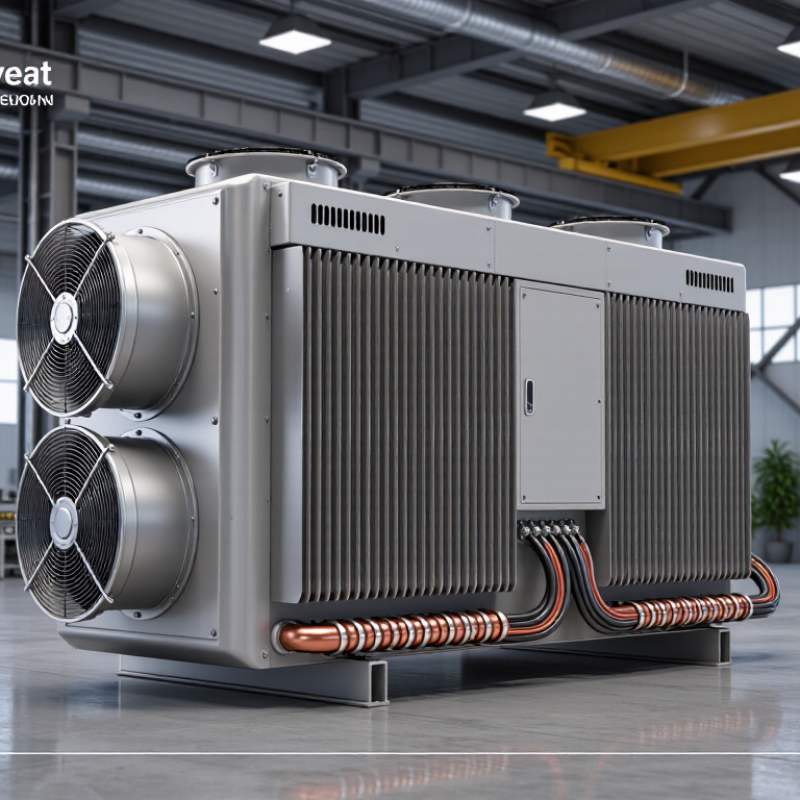
Air-cooled transformers are electrical transformers that release heat directly into the surrounding air. They do not use oil or another liquid for insulation and cooling. Instead, solid insulation protects the windings, while natural airflow carries heat away from the core and coils.
In practice, these units are commonly called dry-type transformers. Some rely on natural convection, while others use fans when loads rise. A technician may inspect winding surfaces, ventilation paths, terminals, and temperature sensors during routine maintenance. Clean airflow matters. Dust can reduce cooling performance and shorten insulation life.
Their design suits hospitals, commercial buildings, renewable energy facilities, factories, and transport infrastructure. Indoor installation can reduce concerns about liquid leakage and fire separation. However, air-cooled does not mean maintenance-free. Engineers still need to check altitude, ambient temperature, humidity, enclosure protection, and expected load cycles. A transformer rated for a mild indoor room may perform differently in a hot, dusty site.
International projects require careful coordination between local codes, project specifications, and recognized transformer standards. Engineers should confirm insulation levels, sound limits, short-circuit strength, and cooling requirements before production. Field experience shows that small ventilation mistakes can create large temperature problems. Air cooling is practical, but it is not automatically the best choice for every location.
Air-cooled transformers transfer electrical energy through magnetic induction. Their core and windings sit inside a dry, insulated enclosure. Heat moves from the windings to surrounding air. Natural air circulation cools the unit in AN designs. Fans provide additional airflow in AF designs.
It is a simple process. Temperature sensors monitor hot spots continuously. If temperatures rise, fans can start automatically. This arrangement removes the need for oil, reducing leak risks and simplifying indoor installation. IEC 60076-11 defines key requirements for dry-type transformers, including insulation performance, temperature rise, and environmental testing.
The U.S. Department of Energy’s 2016 distribution transformer rule estimated 3.63 quadrillion Btu of energy savings over 30 years. That figure covers regulated distribution transformers, not every air-cooled model. Still, it shows why efficiency matters across large electrical networks.
In project inspections, engineers should check ventilation paths, dust levels, altitude, and enclosure protection. Blocked grilles can raise winding temperatures quickly. Sizing mistakes still happen. A transformer may meet its rated load, yet fail under high ambient heat or frequent overloads. Air cooling also produces audible fan noise, which some facilities underestimate. Careful thermal calculations and site testing remain essential, especially in hospitals, factories, tunnels, and renewable-energy installations.
Global projects need transformer choices that tolerate different climates, codes, and maintenance capabilities. Air cooled transformers help by eliminating insulating oil, reducing spill concerns and limiting fire exposure inside buildings. That matters in hospitals, transit stations, data centers, and renewable energy sites with restricted access.
The International Energy Agency’s Electricity 2024 report projects global electricity demand will grow by about 3.4% annually from 2024 to 2026. More demand means faster infrastructure deployment. Air cooled units can support this pace because they usually require simpler civil protection, oil containment, and inspection arrangements. Installation is often cleaner in urban sites. Technicians can also inspect windings, ducts, and temperature sensors without handling liquid insulation.
IRENA reported 473 GW of renewable capacity additions in 2023. Many projects use compact substations near solar fields, battery systems, or commercial facilities. Air cooled transformers suit these applications when ventilation is properly engineered. IEC 60076-11 also provides requirements for dry-type transformers, helping international teams align testing and safety expectations.
The benefit is not universal. Air cooled designs depend on clear airflow and controlled heat dissipation. Dust, salt, high altitude, and extreme humidity can reduce performance if designers underestimate local conditions. I have seen specifications become too optimistic when “maintenance-free” is treated literally. Filters, terminals, and cooling paths still need scheduled checks. Project teams should compare thermal class, enclosure rating, acoustic limits, and local service skills before choosing the final configuration.
Why Choose Air Cooled Transformers for Global Projects?
How Do Environmental Conditions Affect Transformer Selection?
Environmental conditions often decide whether an air-cooled transformer performs reliably. In dry indoor rooms, natural ventilation may be sufficient. However, hot climates can reduce cooling efficiency and shorten insulation life. Engineers should check the highest expected temperature, not the yearly average.
Humidity creates another concern. Moisture can condense on windings during overnight temperature changes. Coastal projects also face salt particles, which may encourage surface tracking. Dusty locations require suitable enclosures, filters, and regular inspection. These details matter in factories, ports, mines, and remote renewable-energy sites.
Altitude affects cooling and electrical clearances. Thinner air removes less heat, so derating may be necessary above standard installation elevations. A practical site survey should record altitude, airflow, dust levels, and available maintenance access. International guidance, including applicable IEC or IEEE requirements, can support the final design.
Air cooling removes the risk of liquid leakage and simplifies some indoor installations. It can also suit buildings where fire protection limits liquid-filled equipment. Still, it is not automatically the best choice. Poor ventilation, heavy contamination, or extreme heat may require forced cooling or another transformer design. A selection can look correct on paper yet fail under real dust and heat. That uncomfortable possibility deserves attention before procurement.
Air-cooled transformers rely on natural or forced air circulation to remove heat. As altitude increases, air density decreases, reducing cooling effectiveness. At approximately 3,000 m, standard-atmosphere air density is about 26% lower than at sea level, so transformer projects may require capacity derating, larger cooling surfaces, or forced-air ventilation.
Environmental selection should also consider ambient temperature, humidity, dust, salt mist, and indoor or outdoor installation. Air-cooled designs avoid liquid leakage risks, while enclosures, corrosion protection, filtration, and ventilation must be matched to the local climate.
Air cooled transformers suit many global projects because they avoid liquid insulation and simplify indoor installation. Their dry construction can reduce spill concerns in hospitals, factories, tunnels, and commercial buildings. However, “maintenance-free” is an unsafe assumption. Dust, blocked ventilation, and heat can still shorten insulation life.
IEC 60076-1 provides general transformer requirements, while IEC 60076-11 addresses dry-type transformers. These standards cover insulation, temperature rise, dielectric tests, and routine verification. In North American projects, IEEE C57.12.01 may guide dry-type transformer design and testing. Local electrical codes still control installation details. Standards matter.
Project engineers should also check IEC 60529 for enclosure protection. An IP rating helps match the transformer to dust, moisture, and accidental contact risks. Altitude requires attention because thinner air reduces cooling performance. Manufacturers may need to apply derating above the stated installation height. Ambient temperature, harmonics, seismic loads, and fire behavior also deserve documented review.
A reliable specification should request type-test reports, routine-test records, thermal calculations, and clear acceptance criteria. It should identify the applicable national grid code before procurement.
Certification alone does not prove suitability for every site. A checklist can still miss poor airflow around the enclosure. That weakness is worth discussing during design reviews. Experienced teams compare the standard, the room, and the actual operating profile before approval.
It releases heat directly into surrounding air. Solid insulation protects the windings and core. No liquid insulation is used. Natural airflow or fans remove heat.
They suit hospitals, offices, factories, transport facilities, and renewable energy sites. Indoor installation is often practical. They can fit near electrical rooms, solar equipment, or battery systems.
They avoid insulating-oil leaks inside buildings. This can simplify spill control and fire separation. That matters in crowded facilities. The design is not risk-free.
No. Technicians should inspect airflow paths, terminals, windings, and temperature sensors. Dust may block ventilation and reduce cooling. Cleaning schedules still matter.
High temperature, humidity, salt, dust, and altitude can reduce performance. Thinner air cools less effectively at high elevations. Designers may need capacity derating. A mild indoor rating may fail in a hot workshop.
Not always. Some units use natural convection. Others start fans when loads or temperatures increase. Fan controls should match expected load cycles.
Teams should review insulation levels, temperature rise, sound limits, and short-circuit strength. They should also check enclosure protection and cooling requirements. Local codes still control installation details. Do not rely on certification alone.
Request thermal calculations, routine-test records, and type-test evidence. Check the actual room, airflow, altitude, and operating profile. Review harmonics, seismic loads, and fire behavior where relevant. A checklist can still miss a blocked air path.
An Air Cooled Transformer is a dry-type electrical transformer that uses air, rather than liquid insulation, to cool its windings and core. It works by transferring electrical energy between circuits through electromagnetic induction while natural or assisted airflow removes the heat produced during operation. This design is well suited to global projects because it reduces the risk of oil leaks, simplifies maintenance, and offers reliable performance in commercial buildings, industrial facilities, renewable energy systems, and infrastructure applications.
Selecting the right transformer requires careful consideration of local environmental conditions, including temperature, humidity, altitude, dust, ventilation, and indoor or outdoor installation. These factors influence insulation levels, cooling capacity, enclosure protection, and service life. International projects must also follow applicable electrical and safety standards, testing procedures, and installation requirements. By combining efficient operation, strong safety characteristics, and adaptable engineering, air-cooled technology can provide a practical and dependable solution for diverse project environments worldwide.