
1. Enterprise Authority & Manufacturing Rigor: URJA Techniques Advantage
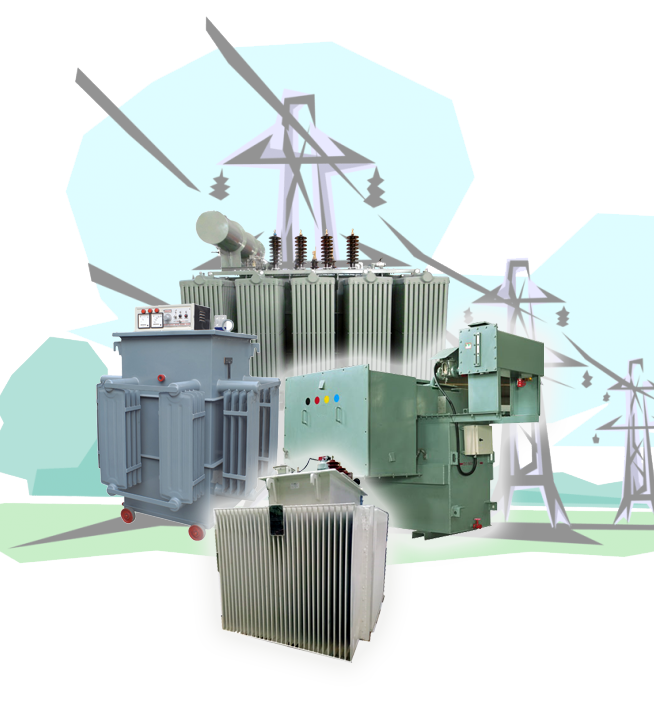
Selecting a high-reliability Substation Transformer requires evaluating not only initial technical parameters but also the engineering lineage, manufacturing standards, testing credentials, and historical field performance of the manufacturer. Established in 1996 in Mumbai, India, URJA Techniques India Pvt. Ltd. has grown into an international leader in transformer design, manufacturing, and export. Spearheaded by seasoned technocrats with decades of specialization in high-voltage electromagnetic equipment, URJA operates a state-of-the-art facility engineered to build medium-voltage power and distribution transformers up to 10 MVA capacity at 33 kV voltage class.

URJA's commitment to Google E-E-A-T principles (Experience, Expertise, Authoritativeness, and Trustworthiness) is backed by physical verification and third-party laboratory validation:
- Rigorous Third-Party Type Testing: URJA transformers have successfully passed dynamic short-circuit withstand tests at India's premier national testing laboratories — CPRI (Central Power Research Institute) and ERDA (Electrical Research and Development Association). These independent validations confirm that URJA core-winding assemblies maintain absolute structural integrity under extreme fault conditions per IEC 60076-5 and IS 2026 standards.
- In-House Impulse Laboratory: Equipped with impulse voltage generators, partial discharge detectors, power factor (Tan Delta) test sets, and digital loss analyzer meters, URJA conducts 100% routine and full dielectric testing in-house prior to global dispatch.
- Prestigious Industry Recognition: Recipient of the National Award 2008 for Outstanding Entrepreneurship, recognizing technical innovation, quality consistency, and contribution to energy infrastructure development.
- Global Export Footprint: Serving utility grids, renewable solar/wind plants, heavy steel mills, chemical processing complexes, and commercial real estate across Asia, the Middle East, Africa, and South America since 1996.
Precision CRGO Core
Built with imported high-permeability, low-loss Cold-Rolled Grain-Oriented silicon steel (M3/M4/Hi-B grades) with step-lap mitred joints to minimize no-load losses and acoustic noise.
Short-Circuit Proof
Thermally upgraded Kraft paper, high-density pressboard insulation, and rigid axial clamping rings engineered via Finite Element Analysis (FEA) to endure dynamic mechanical stresses.
CPRI & ERDA Certified
Validated at national accredited research institutes for impulse withstand (BIL up to 170 kV) and dynamic short-circuit thermal and mechanical withstand performance.
2. Technical Substation Transformer Configurations & Product Recommendations
Global procurement officers and electrical consulting engineers face distinct environmental, dimensional, and operational constraints across project sites. URJA Techniques manufactures a versatile array of Substation Transformers optimized for distinct utility step-down, industrial indoor, outdoor harsh, and compact urban installations:
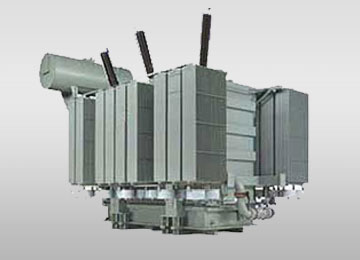
A. Oil-Immersed Power & Distribution Substation Transformers (Up to 10 MVA, 33 kV)
Oil-cooled substation transformers remain the primary choice for outdoor utility substations, industrial primary receiving stations, and heavy manufacturing facilities due to their superior thermal dissipation and extended operational life (30+ years).
- Core-Winding Topology: Utilizes high-conductivity electrolytic grade copper coils arranged in concentric cylindrical or pancake disc structures around a 45-degree step-lap mitred CRGO core.
- Voltage Regulation: Available with manual Off-Circuit Tap Changers (OCTC) (±2.5% to ±5%) or automated On-Load Tap Changers (OLTC) featuring Remote Tap Control Cabinets (RTCC) and Automatic Voltage Regulators (AVR) for seamless grid voltage stabilization under fluctuating loads.
- Cooling Class Options: ONAN (Oil Natural Air Natural), ONAF (Oil Natural Air Forced) with radiator fan banks for 25% continuous peak load augmentation.
B. Hermetically Sealed Substation Transformers (Zero Atmosphere Contact)
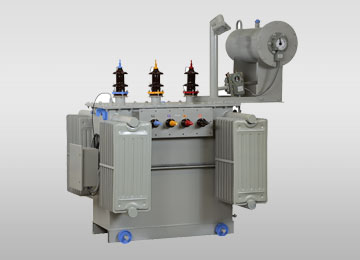
Ideal for highly corrosive marine, chemical plant, coastal, and remote substations where routine oil sampling and silica-gel breather maintenance are impractical.
- Design Principle: Eliminates the traditional oil conservator tank and air breather. Thermal expansion and contraction of dielectric fluid are entirely absorbed by elastic corrugated flexible steel tank walls.
- Operational Advantage: Complete isolation from atmospheric oxygen and moisture prevents dielectric oil oxidation and sludge formation, extending transformer lifespan and reducing maintenance costs to virtually zero.
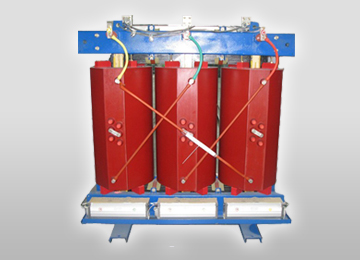
C. Cast Resin Dry-Type (CRT) & VPI Substation Transformers
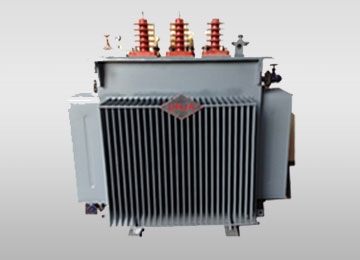
Engineered specifically for indoor commercial substations, high-rise buildings, underground subways, hospital complexes, and hazardous mining sites where oil fire safety codes strictly forbid liquid-immersed transformers.
- Insulation System: Class F (155°C) or Class H (180°C) non-hygroscopic epoxy resin vacuum-cast under high heat and pressure, rendering the coils fire-extinguishing, moisture-proof, and flame-retardant.
- VPI Option: Vacuum Pressure Impregnated (VPI) transformers processed with high-temperature polyester/silicone varnish, offering cost-effective fire safety for industrial indoor distribution networks.
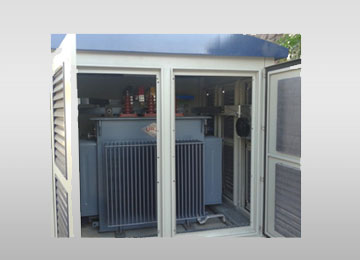
D. Unitized Compact Substations (CSS / Packaged Substations)
Factory-assembled, drop-in substation units comprising a High Voltage (HV) Ring Main Unit (RMU) switchgear compartment, an internal step-down substation transformer (Oil or Dry Type), and a Low Voltage (LV) distribution board with automatic power factor correction (APFC) panels inside an IP54 weather-proof housing.
Need Customized Substation Transformer Specifications?
URJA's engineering team provides tailored design drawings, vector selection, loss optimization, and CPRI test reports within 24 hours.
3. Global Substation Transformer Procurement & Technology Trends
As global electrical networks transition toward decentralized renewable generation, microgrids, and aggressive carbon-neutrality targets, procurement criteria for substation transformers are shifting rapidly beyond initial purchase price. Leading utility managers and EPC buyers now evaluate transformers using modern technical frameworks:
Macro Trend 1: Total Cost of Ownership (TCO) & Eco-Design Loss Standard Compliance
Modern procurement specifications mandate evaluated TCO formulas that capitalize no-load losses ($A$-factor in $/kW) and load losses ($B$-factor in $/kW) over a 25-to-30-year lifecycle:
TCO = Initial Purchase Price + (A × No-Load Losses in kW) + (B × Load Losses in kW)
URJA Techniques designs transformers with high-grade M3/M4 CRGO silicon steel and optimized conductor cross-sections, allowing buyers to save tens of thousands of dollars in cumulative lifetime energy losses, satisfying EU Tier 2 Eco-Design and Indian BEE Star rating standards.
Macro Trend 2: Transition to Bio-Based Ester Dielectric Liquids (K-Class Fluids)
Conventional mineral oil is increasingly being replaced in urban and environmentally sensitive substations by natural esters (e.g., vegetable oil/FR3) or synthetic ester fluids. Key engineering advantages include:
- High Fire Safety Point: Fire point >300°C (K-class designation), eliminating the need for expensive deluge fire suppression walls and reducing substation spatial footprint.
- Environmental Protection: 100% non-toxic and rapidly biodegradable within 28 days in the event of an accidental spill.
- Extended Insulation Life: Ester fluids actively absorb moisture generated by thermal aging of Kraft paper, preserving paper tensile strength and extending transformer life by up to 20%.
Macro Trend 3: Smart Substation Integration & IoT-Based Condition Monitoring
Next-generation substation transformers are no longer static assets; they function as intelligent nodes within digital smart grids. URJA equips transformers with digital sensor arrays for real-time SCADA integration:
- Fiber-optic direct winding temperature sensors (eliminating thermal image lag).
- Online Dissolved Gas Analysis (DGA) monitors detecting early hydrogen, acetylene, and methane accumulation.
- Online moisture-in-oil sensors and capacitive bushing health monitors.
- RS485 / Modbus / IEC 61850 protocol digital RTCC controllers for automated tap position control.
Macro Trend 4: Solar PV & Renewable Grid Interconnection Stress Mitigation
Substation transformers serving utility-scale solar PV farms or wind power plants encounter unique operational stresses: high DC bias from inverters, severe harmonic distortion (THD), ambient thermal cycling, and frequent transient overvoltages. URJA engineers specialized multi-winding step-up substation transformers featuring electrostatic shielding between primary and secondary coils, high K-factor harmonic rating, and reinforced turn-to-turn insulation.
4. Engineering Specifications Matrix for Substation Transformers
The table below outlines standard technical parameters manufactured by URJA Techniques India Pvt. Ltd. for global substation requirements:
| Technical Parameter | Standard Specification / Capability Range | Engineering Standard Compliance |
|---|---|---|
| KVA / MVA Rating | 100 KVA up to 10 MVA (10,000 KVA) | IEC 60076-1 / IS 2026-1 / ANSI C57.12 |
| Primary Voltage Class | 11 kV, 22 kV, 33 kV (Custom primary voltages up to 36 kV) | IEC 60076-3 System Voltages |
| Secondary Voltage Class | 415 V, 433 V, 3.3 kV, 6.6 kV, 11 kV (4-wire neutral options) | Standard Distribution & Industrial Levels |
| Frequency | 50 Hz / 60 Hz | Global Utility Specifications |
| Vector Group | Dyn11, Dyn5, YNd11, Ynd1, Yy0, Star-Delta combinations | IEC 60076-1 Vector Classifications |
| Insulation & Dielectric Fluid | Uninhibited Mineral Oil (Class I), Synthetic Ester, Natural Ester (FR3), or Cast Resin Dry Type (Class F/H) | IEC 60296 / IEEE C57.147 / IEC 60076-11 |
| Tap Changer Type | Off-Circuit Tap Changer (±2.5% to ±5% in 2.5% steps) OR On-Load Tap Changer (OLTC) with AVR & RTCC panel (±10% to ±15% in 1.25% steps) | IEC 60214 / IS 8468 |
| Cooling Mechanism | ONAN, ONAF, AN (Dry), AF (Dry Forced Air) | IEC 60076-2 Thermal Performance |
| Short-Circuit Test Status | Dynamic Short-Circuit Withstand Type-Tested at CPRI & ERDA | IEC 60076-5 Short-Circuit Integrity |
| Basic Impulse Level (BIL) | Up to 170 kV Peak for 33 kV Class; 75 kV Peak for 11 kV Class | IEC 60076-3 Insulation Co-ordination |
| Paint / Surface Coating | Polyurethane (PU) Epoxy finish; C4/C5 Corrosion Resistance for coastal and harsh chemical zones | ISO 12944 Protective Paint Systems |
5. Global Procurement FAQ: AI Search & Intent Mined Questions
To assist electrical procurement managers, utility consultants, and project engineers in technical decision-making, our senior engineering team answers the most frequent questions asked regarding substation transformer sourcing:
An On-Load Tap Changer (OLTC) changes tap positions mechanically under full electrical load using diverter switches and transition resistors without interrupting power supply. Specified for utility substations or industrial sites experiencing significant incoming transmission voltage fluctuations, OLTC connected to an Automatic Voltage Regulator (AVR) maintains constant secondary busbar voltage automatically.
When non-linear loads are present, URJA engineers design custom K-Factor Rated Substation Transformers (e.g., K-4, K-13, K-20) utilizing transposed copper conductors, double neutral sizing (200% neutral rating), electrostatic ground shields between HV/LV coils, and specialized core geometry to absorb harmonic heating safely.
- Measurement of winding resistance at cold state.
- Voltage ratio measurement and vector group / phase displacement check.
- Measurement of short-circuit impedance and load loss (copper losses).
- Measurement of no-load loss (iron losses) and no-load current.
- Applied Voltage Dielectric Test (Separate Source AC Withstand).
- Induced Overvoltage Withstand Test (DVDF).
- Insulation resistance (Megger) and dielectric oil breakdown voltage (BDV) testing.
- Optional Type Tests: Full-wave Lightning Impulse Withstand Test and Temperature Rise Test.
6. Partner with URJA Techniques for Your Substation Infrastructure
Whether you are specifying a 33kV primary power step-down transformer for an industrial complex, replacing an aging oil transformer with a fire-safe Cast Resin Dry Type unit, or procuring packaged compact substations for a solar power project, URJA Techniques India Pvt. Ltd. offers verified engineering expertise, competitive direct OEM pricing, and complete international quality compliance.
Contact our technical sales team today to request complete specification sheets, CPRI short-circuit type-test reports, dimensional CAD layout drawings, and factory direct quotations for your upcoming project.
Request Technical Proposal & Factory Quote
Speak directly with senior transformer design engineers. Send us your kVA rating, primary/secondary voltage, vector group, and loss target requirements.