Technical Architecture & Engineering Fundamentals
Understanding Modern Air Cooled Transformers: Physics, Cooling Dynamics, and Safety Metrics
An Air Cooled Transformer—frequently referenced across industrial electrical engineering as a Dry Type Air Cooled Transformer—is a static electromagnetic device that utilizes natural or forced ambient air circulation to dissipate heat generated within its magnetic core and conductive windings. Unlike traditional oil-immersed transformers that rely on flammable mineral oils or synthetic ester fluids for dielectric insulation and thermal dissipation, air-cooled dry-type units utilize solid dielectric insulation materials combined with engineered air ventilation ducts.
In modern industrial power distribution, the shift toward air-cooled transformers is driven by strict safety regulations, urban space constraints, and corporate decarbonization targets. Eliminating liquid coolants removes the risk of transformer oil leaks, explosive thermal runaways, and ground-soil contamination. This enables direct indoor installation adjacent to high-voltage equipment, heavy manufacturing lines, data server racks, and commercial load centers.
Information Gain Insight: Thermal Dissipation Kinetics (AN vs. AF)
In an Air Natural (AN) cooling configuration, thermal transfer relies entirely on buoyancy-driven free convection. As the primary and secondary copper/aluminum windings heat up under electrical load, the adjacent air column warms, expands, drops in density, and rises naturally through vertical cooling ducts integrated into the coil assembly. Cold room-ambient air is drawn inward from the base vents. When augmented with temp-controlled axial fans—converting the system to Air Forced (AF) cooling—forced air velocity increases heat dissipation capacity by up to 40%. This allows EPC engineers to temporarily operate the transformer at emergency overload ratings without compromising Class F (155°C) or Class H (180°C) thermal thresholds.
At URJA Techniques India Pvt. Ltd., our technocrat engineering team has refined dry-type air-cooled transformer manufacturing since 1996. By selecting high-permeability, cold-rolled grain-oriented (CRGO) silicon steel cores and vacuum-impregnating or resin-encapsulating precision windings, URJA delivers units with low total losses, low partial discharge values (<10 pC), and exceptional mechanical withstand during electrical short circuits.
High-Performance Equipment Selection
URJA Air Cooled Transformer Series: Recommended Product Range
Selecting the correct air-cooled transformer configuration depends on ambient environmental factors, atmospheric pollution levels, harmonic distortion loads, and space restrictions. Below are URJA’s primary export-grade air-cooled transformer product lines engineered for heavy industrial and utility projects globally.
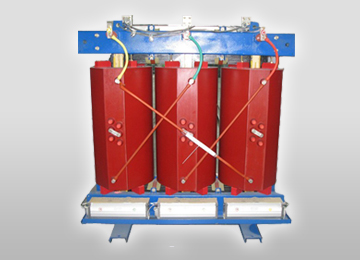
Cast Resin Air Cooled Transformer (CRT / CRDT)
Engineered with fiberglass-reinforced epoxy resin cast under a high-vacuum chamber. Fully encapsulates HV and LV windings, preventing dust, humidity, and corrosive chemical vapors from penetrating the insulation matrix.
- Capacity: Up to 10 MVA
- Voltage: Up to 33 kV Class
- Protection: IP00 to IP54 Enclosures
- Environmental: E2, C2, F1 Rated
Technical Details
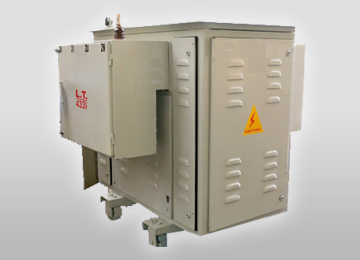
VPI Air Cooled Transformer (Vacuum Pressure Impregnated)
Utilizes open-wound coils subjected to multiple cycles of vacuum and high-pressure impregnation using Class H (180°C) or Class C (220°C) polyester/silicone resin. Delivers superior thermal dissipation flexibility and high short-circuit strength.
- Capacity: Up to 10 MVA
- Insulation: Class H (180°C) / Class C
- Cooling: AN (Air Natural) / AF (Air Forced)
- Standards: IEC 60076-11, IS 11171
Technical Details
Air Cooled Unitized Substation Package
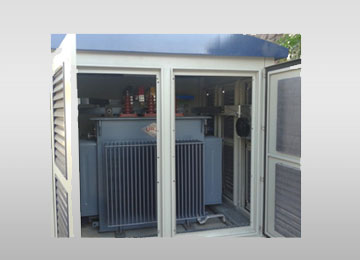
Factory-assembled, self-contained outdoor enclosure integrating an Air Cooled Transformer, High Voltage Ring Main Unit (RMU), and Low Voltage Switchgear panel. Ideal for solar installations, smart cities, and mining camps.
- Integration: Transformer + HT + LT
- Enclosure: Heavy-duty Galvanized Steel
- Installation: Plug-and-play Site Setup
- App: Renewable & Infrastructure
Technical Details
Technical Matrix: Cast Resin vs. VPI Air Cooled Transformer Configurations
To assist electrical procurement teams and consulting engineers in specifying the correct transformer design, URJA provides a technical baseline comparison:
| Engineering Parameter |
Cast Resin (CRT) Air Cooled |
VPI (Vacuum Pressure Impregnated) |
Oil-Immersed (Baseline Comparison) |
| Cooling Medium |
Ambient Air (AN / AF) |
Ambient Air (AN / AF) |
Mineral Oil / Synthetic Ester |
| Fire Hazard Level |
Zero (Self-extinguishing F1) |
Zero (Non-flammable Class H/C) |
High Fire Risk (Requires Catch Pit & Halon) |
| Moisture & Chemical Resistance |
Highest (Hermetically Encapsulated) |
High (Varnish Sealing) |
N/A (Sealed Tank dependent) |
| Overload Flexibility (AF mode) |
Up to +40% with forced air fans |
Up to +33% with forced air fans |
Up to +15% (Oil thermal inertia limited) |
| Partial Discharge (PD) Level |
Exceptionally Low (<10 pC) |
Low (<20 pC) |
N/A |
| Maintenance Overhead |
Near Zero (Routine Dust Wipe) |
Low (Periodic Inspection) |
High (Oil Testing, DGA, Filtration) |
| Ideal Installation Environments |
Offshore platforms, chemical plants, high-rise |
Industrial mills, data centers, hospitals |
Outdoor substations, high-voltage grids |
Industry Insights & Future Technology Roadmap
Global Procurement & Technological Trends in Air Cooled Transformers (2025–2030)
As international energy grids modernize and corporate sustainability directives tighten, the global market for air-cooled transformers is experiencing key shifts. Buyers and EPC contractors must evaluate several critical trends before finalizing capital equipment specifications:
1. Decarbonization & Mandatory ESG Compliance
Global environmental guidelines (such as EU Eco-Design Stage 2 and US DOE efficiency standards) mandate strict load and no-load loss limits. Air Cooled Transformers eliminate soil contamination risks and remove the need for oil filtration, aligning perfectly with ISO 14001 ESG metrics.
2. IoT-Enabled Thermal Monitoring & Predictive Maintenance
Future-ready air-cooled transformers are equipped with embedded multi-channel PT100 temperature sensors and fiber-optic thermal probes within the winding core ductways. Integrated RS485/Modbus digital controllers transmit live hot-spot data directly to SCADA systems, enabling predictive maintenance before thermal breakdown occurs.
3. Harmonic Mitigation for AI Data Centers & Renewables
The rapid growth of AI data centers, solar PV farms, and EV charging hubs has increased non-linear load harmonics on transformer networks. Modern air-cooled units feature K-Factor custom designs (K-4, K-13, K-20) with electrostatic shielding between primary and secondary windings to neutralize stray eddy losses and high neutral currents.
4. Life-Cycle Total Cost of Ownership (TCO) Optimization
While the initial capital expenditure (CAPEX) for a dry-type air-cooled transformer can be 15% to 25% higher than an equivalent oil-immersed unit, the operational savings (OPEX) over a 25-year lifecycle yield a lower TCO. Savings stem from zero oil testing, no fire suppression system installation, reduced civil works, and proximity to load centers reducing cable losses.
Enterprise Credentials & Proven Experience
Why Global EPCs & Engineers Partner with URJA Techniques India
Headquartered in Wadala, Mumbai, with advanced manufacturing and testing infrastructure in Rabale, Navi Mumbai, URJA Techniques India Pvt. Ltd. stands as a benchmark of reliability in industrial transformer manufacturing. Founded in 1996 by technocrats, URJA’s technical authority is grounded in decades of practical field experience, rigorous quality control systems, and verified testing credentials.
Independent CPRI & ERDA Certification
URJA Air Cooled Transformers are type-tested for dynamic short-circuit withstand capabilities at accredited government laboratories: CPRI (Central Power Research Institute) and ERDA (Electrical Research and Development Association). In-house impulse testing up to 33 kV guarantees lightning impulse endurance under extreme grid transients.
National Award Winner & ISO 9001:2015 Quality
Honored with the National Award 2008 for Outstanding Entrepreneurship, URJA operates under an ISO 9001:2015 certified Quality Management System. Every unit undergoes 100% routine testing—including winding resistance, turns ratio, vector group, separate source voltage withstand, induced overvoltage, and loss measurement—prior to dispatch.
Proven Global Export Footprint
URJA successfully exports custom-built industrial transformers to over 20 countries across Asia, the Middle East, Africa, and North America. Our designs meet strict international standards including IEC 60076, ANSI C57, IEEE, and IS 11171, facilitating smooth site approval by international consultants.
Custom Engineering up to 10 MVA, 33 kV
Our technocrat-led engineering team builds bespoke transformers designed for unique project conditions. Options include custom enclosure IP ratings (IP20 to IP54), high-altitude derating, low noise acoustic dampening, dual secondary windings for multipulse converter drives, and specialized off-circuit tap changers (OCTC).
Buyer Inquiry & Intent Resolution
Frequently Asked Questions (FAQ) — Air Cooled Transformer Procurement
Below are technical answers to common queries submitted by global procurement managers, plant engineers, and EPC electrical designers when sourcing Air Cooled Transformers:
1. What is the technical difference between Air Natural (AN) and Air Forced (AF) cooling in an Air Cooled Transformer?
Air Natural (AN) cooling relies on thermal buoyancy and ambient air circulation to dissipate heat from the core and winding surfaces without mechanical assistance. It provides maintenance-free, zero-noise cooling suitable for standard continuous loads.
Air Forced (AF) cooling incorporates automatic, temperature-actuated cross-flow cooling fans mounted at the base of the transformer coils. When winding temperatures exceed set thresholds (e.g., 90°C), the fans engage, increasing airflow velocity through cooling ducts. AF mode increases continuous power delivery capacity by up to 33%–40% above the base AN rating, allowing plant operators to handle peak demand or emergency overloads without thermal breakdown.
2. Why are Air Cooled Dry Type Transformers mandatory for high-rise buildings, underground subways, and data centers?
Air Cooled Dry Type Transformers eliminate flammable liquid dielectric fluids, removing fire hazards and explosion risks. Certified under strict fire behavior classifications (such as F1 - Self-Extinguishing), they produce low smoke emissions and zero toxic halogen gases under direct fire exposure.
This fire-safe performance permits direct installation inside occupied structures, basements, and sub-stations near load centers. It eliminates the capital expense of constructing reinforced concrete fire walls, oil catch basins, and dedicated deluge fire suppression systems required for oil-filled units.
3. How does URJA ensure the short-circuit withstand capability of its Air Cooled Transformers?
Short-circuit withstand capabilities depend on mechanical bracing, precision coil winding, and structural design strength. URJA utilizes high-tensile glass-reinforced epoxy spacers, heavy-duty steel clamping frames, and pre-compressed disk windings to resist massive radial and axial electromagnetic forces generated during grid short-circuit faults.
Our designs are independently type-tested and certified by premier research labs: CPRI (Central Power Research Institute) and ERDA up to 10 MVA, 33 kV. These tests confirm structural integrity under extreme dynamic short-circuit stress.
4. What is the operational difference between Cast Resin (CRT) and Vacuum Pressure Impregnated (VPI) Air Cooled Transformers?
Cast Resin (CRT): High-voltage windings are completely encapsulated in solid quartz-filled epoxy resin under a vacuum. This creates a solid block around the coils, providing high resistance to extreme ambient humidity, heavy industrial dust, chemical fumes, and harsh atmospheric environments (E2 rating). Partial discharge is exceptionally low (<10 pC).
VPI (Vacuum Pressure Impregnated): Windings are open-wound using Class H (180°C) or Class C (220°C) high-temperature insulation materials, then subjected to multiple vacuum and pressure cycles in high-grade dielectric varnish. VPI units offer excellent thermal dissipation, high overload capabilities, low weight, easier field repairability, and lower initial capital cost.
5. How are Air Cooled Transformers customized for non-linear load applications like VFDs and solar inverters?
Non-linear loads generate current harmonics (3rd, 5th, 7th, 11th, etc.) that increase eddy current losses in windings and stray heating in clamping structures. URJA custom-engineers Air Cooled Transformers with designated K-Factor ratings (K-4, K-13, K-20) by implementing:
- Electrostatic Shielding: Copper shielding placed between primary and secondary windings to ground high-frequency noise and transients.
- Neutral Conductor Oversizing: Neutral busbars sized up to 200% of phase current rating to accommodate triplen harmonic currents.
- Flux Density Reduction: High-grade CRGO cores operating at reduced magnetic flux densities (<1.55 Tesla) to prevent core saturation.
- Multi-Strand Transposed Conductors: Parallel transposed conductors to reduce stray skin and proximity eddy current losses.
6. How do altitude and extreme ambient temperatures affect Air Cooled Transformer ratings?
Air cooled transformers rely on air density for heat dissipation and dielectric insulation strength. Standard ratings apply to altitudes up to 1,000 meters above sea level and maximum ambient temperatures of 40°C or 50°C per IEC 60076-11.
For installations at higher altitudes (>1,000m), lower air density reduces cooling efficiency and dielectric breakdown strength. URJA applies specific thermal and insulation derating calculations during design, adjusting winding surface areas, cooling duct width, or upgrading insulation class ratings to ensure full output performance without overheating.
7. Can an Air Cooled Transformer be installed outdoors?
Yes. While basic dry-type transformer cores are rated IP00 for indoor substation rooms, URJA manufactures protective weatherproof metal enclosures rated from IP23 (drip-proof outdoor) up to IP54 (dust and water-jet protected). Outdoor enclosures feature anti-corrosion poly-urethane paint, sloped rain canopies, screened louvered vents, internal space heaters to prevent condensation, and optional forced-ventilation fan packages.