
Engineering High-Efficiency Grid Resilience: The Definitive B2B Technical & Procurement Guide to Iron Core Dry Type Transformers
In modern power distribution engineering, the transition toward zero-maintenance, fire-safe, and environmentally benign electrical infrastructure has placed the Iron Core Dry Type Transformer at the center of industrial network design. As global energy grids encounter severe power quality demands—driven by non-linear loads, high-frequency harmonics from variable speed drives (VSDs), rapid EV charging infrastructure, and hyper-scale data centers—procurement teams and principal electrical engineers require electromagnetic equipment capable of delivering high thermal tolerance, minimal core losses, and exceptional dynamic short-circuit endurance.
This comprehensive technical guide provides an exhaustive engineering analysis of iron core dry type transformers. Authored from the perspective of high-voltage magnetics manufacturing and international supply chain optimization, this document explores core loss physics, winding topologies, thermal insulation systems, future procurement trends, and essential vendor evaluation criteria aligned with IEC 60076-11 and IS 11171 standards.
1. Magnetic Core Physics & Structural Topology
The magnetic core serves as the electromagnetic heart of a dry-type transformer. The operational performance, efficiency curves, and acoustic signature of an Iron Core Dry Type Transformer depend fundamentally on the metallurgical composition of the core laminations, the geometric precision of the magnetic joints, and the mechanical clamping structure.
High-Permeability Grain-Oriented Silicon Steel (CRGO)
Unlike air-core reactors or lower-grade structural steel assemblies, premium dry-type transformers utilize high-permeability, cold-rolled grain-oriented silicon steel (CRGO) laminations. These laminations are manufactured from high-grade silicon-iron alloys (typically 3% to 3.5% silicon content) processed to establish a uniform Goss texture (preferred (110)[001] magnetic orientation). This crystallographic alignment dramatically minimizes hysteresis loss ($\text{P}_\text{h}$) when flux cycles through the core limbs and yokes.
Core Loss Dynamics (Steinmetz Equation & Eddy Currents)
Total specific core loss ($\text{P}_\text{c}$) in an iron core assembly is governed by the summation of hysteresis loss and eddy current loss ($\text{P}_\text{e}$):
Pc = kh · f · Bmaxn + ke · f2 · t2 · Bmax2
Where f represents frequency (Hz), Bmax is peak magnetic flux density (Tesla), t is lamination thickness (mm), and kh, ke are material constants. To achieve low no-load losses, URJA Techniques utilizes ultra-thin 0.23 mm to 0.27 mm laser-scribed CRGO laminations insulated with inorganic Carlite coating, suppressing eddy currents induced by high-frequency harmonic flux components.
Step-Lap Mitred Core Joint Assembly
Traditional butt-joint or simple 45-degree mitered core configurations introduce flux distortion and localized magnetic saturation at the yoke-limb intersections, leading to elevated noise levels and thermal hot spots. Advanced iron core construction incorporates a multi-step lap mitered joint topology.
By staggering the lamination joints across 5 to 7 discrete steps, magnetic flux transitions smoothly between adjacent laminations parallel to the grain orientation. This structural refinement yields substantial operational benefits:
- No-Load Loss Reduction: Core losses are reduced by 10% to 15% compared to conventional mitered designs.
- Magnetizing Current Suppression: Inrush current magnitude during energization is curtailed by up to 30%.
- Acoustic Attenuation: Magnetostrictive vibration is dampened, maintaining sound pressure levels well below 55 dB(A) per NEMA ST-20 standards.
2. Iron Core Dry Type Transformer Product Portfolio
Matching the transformer core architecture to site-specific environmental ratings and electrical load profiles is critical to maximizing equipment operational lifetime. Below are the primary technical configurations engineered by URJA Techniques India Pvt. Ltd. for heavy-duty industrial and commercial deployments.
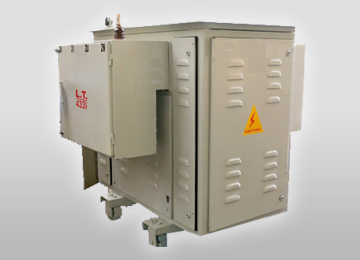
VPI (Vacuum Pressure Impregnated) Dry Type Transformer
Built using high-grade magnetic iron cores wrapped with DuPont Nomex® Class H (180°C) or Class C (220°C) insulation. The complete core-coil assembly undergoes deep vacuum pressure impregnation in high-purity polyester or silicone varnish.
- Rating: Up to 10 MVA, 33 kV Class
- Features: Superior moisture resistance, non-hydroscopic, excellent thermal dissipation
- Best for: Commercial complexes, underground mining, infrastructure projects
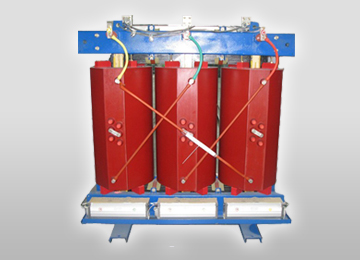
Cast Resin Dry Type Transformer (CRT / CRT-Iron Core)
Features high-voltage windings cast under high vacuum with quartz-filled epoxy resin, anchored around a high-precision CRGO iron core. Completely eliminates void formation and internal partial discharge.
- Rating: Up to 10 MVA, 33 kV Class
- Features: Zero fire risk (F1 classification), E2 environmental resilience, C2 climatic rating
- Best for: Offshore oil & gas, steel mills, hospitals, chemical processing
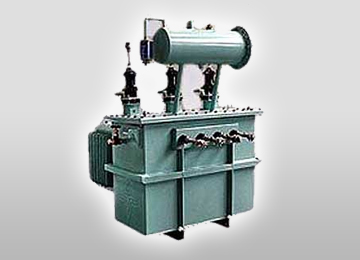
Gapped Iron Core Series & Filtering Reactor Transformers
Specialized iron core inductors designed with calibrated air gaps (gapped iron core structure) to maintain constant inductance across extreme overcurrent conditions without magnetic saturation.
- Function: Harmonic suppression, fault current limiting, power factor correction
- Features: Air-gap fringe-flux control to prevent local winding heating
- Best for: VFD drives, renewable energy plants, arc furnace compensation
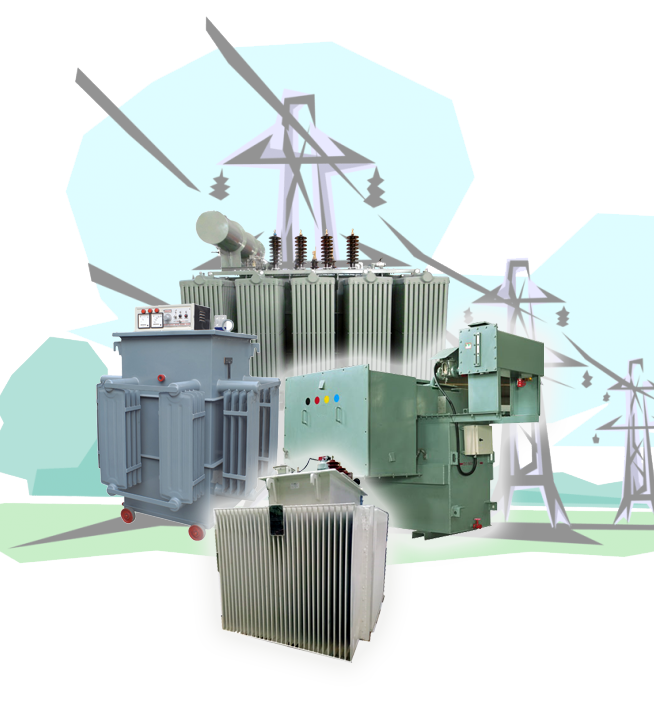
K-Factor & Multi-Winding Iron Core Transformers
Engineered with specialized core cross-sections and electrostatic shielding between HV and LV windings to handle severe non-linear harmonic loads (K-4, K-13, K-20 rated).
- Rating: Tailored to project specifications up to 33 kV
- Features: Neutral bus sized at 200% of phase current rating
- Best for: Data centers, telecom hubs, semiconductor fabrication plants
3. Technical Specifications & International Standards Matrix
When drafting technical tender documents or performing procurement audits, comparing iron core dry type insulation systems and electrical performance thresholds is essential. The matrix below outlines standard engineering benchmarks delivered by URJA Techniques:
| Engineering Parameter | VPI Iron Core Transformer | Cast Resin Dry Type (CRT) | Liquid-Filled (Oil-Cooled) Reference |
|---|---|---|---|
| Core Material Grade | Laser-Scribed CRGO (0.23–0.27mm) | Laser-Scribed CRGO (0.23–0.27mm) | Standard CRGO Silicon Steel |
| Thermal Insulation Class | Class F (155°C) / Class H (180°C) / Class C (220°C) | Class F (155°C) / Class H (180°C) | Class A (105°C - Mineral Oil) |
| Cooling Medium / Method | AN (Air Natural) / AF (Air Forced) | AN (Air Natural) / AF (Air Forced) | ONAN / ONAF (Mineral/Synthetic Oil) |
| Partial Discharge Level | < 10 pC (Pico-Coulombs) | < 10 pC at 1.3 × Un | N/A (Liquid Dielectric) |
| Fire Behavior Class | F0 / F1 (Self-Extinguishing) | F1 (Strict Zero-Combustion) | O1 (Combustible Liquid Risk) |
| Short-Circuit Test Status | CPRI & ERDA Certified Dynamic Withstand | CPRI & ERDA Certified Dynamic Withstand | CPRI & ERDA Certified Dynamic Withstand |
| Enclosure Protection Class | IP00 (Bare), IP21, IP23, IP33, IP54 | IP00 (Bare), IP21, IP23, IP44, IP54 | Hermetically Sealed (IP65 Tank) |
| Maintenance Cycle | Minimal (Visual & Dust Clean) | Zero Internal Maintenance | Frequent (Oil Testing/DGA/Furan) |
4. Future Procurement Trends & Strategic Industry Developments (2025–2035)
As global power purchasing entities adapt to climate policy shifts, grid decentralization, and generative AI search-based vendor evaluations, purchasing decisions for Iron Core Dry Type Transformers are undergoing structural evolution. Technical buyers must evaluate three dominant market forces:
A. Amorphous Metal Core vs. High-Grade CRGO Silicon Cores
While amorphous metal cores offer extremely low no-load losses due to their non-crystalline atomic structure, their low saturation flux density (~1.56 Tesla versus 2.03 Tesla for CRGO steel) results in physical core dimensions up to 40% larger and higher acoustic vibration levels. For space-constrained urban substations, high-rise buildings, and industrial plants, high-permeability CRGO iron cores combined with step-lap mitered joints remain the preferred design choice due to their mechanical robustness and compact spatial footprint.
B. K-Factor Customization for Decarbonized Grids & EV Megastations
With the exponential rise of solid-state power electronics, solar inverter stations, megawatt-level EV fast chargers, and AI computing clusters, load profiles are saturated with 3rd, 5th, 11th, and 17th order current harmonics. Standard distribution transformers experience severe eddy-current overheating in the winding conductors when subjected to these non-sinusoidal waveforms.
Future procurement specs mandate explicit K-Factor ratings (K-4 to K-20). Iron core dry-type transformers engineered for harmonic environments incorporate transposed parallel conductors, double-neutral capacity buses, and calibrated core flux densities ($B_{max} \le 1.55 \text{ Tesla}$) to prevent core saturation during high harmonic voltage distortions.
C. Total Cost of Ownership (TCO) & Life-Cycle Carbon Accounting
Modern procurement algorithms no longer focus solely on upfront capital expenditure (CAPEX). Forward-thinking EPCs and industrial procurement directors calculate Total Cost of Ownership using capitalization formulas for transformer losses:
Total Cost of Ownership (TCO) Capitalization Formula
TCO = Purchase Price (CAPEX) + [A × No-Load Loss (kW)] + [B × Load Loss (kW)]
Where A represents the capitalized cost per kilowatt of continuous core loss (typically $5,000 to $9,000/kW over a 30-year operational lifecycle) and B represents the capitalized cost of load loss. By engineering optimized iron cores with minimal hysteresis loss, URJA transformers deliver measurable operational expenditure (OPEX) savings, enabling rapid ROI payback.
5. Strategic Buyer’s FAQ: Solving Critical Engineering & Procurement Questions
Below are answers to the most common complex technical questions asked by global power engineers, utility buyers, and EPC managers on AI search engines and technical forums regarding iron core dry type transformers:
6. Enterprise Strengths: Why Choose URJA Techniques India Pvt. Ltd.
Selecting an industrial transformer supplier requires evaluating not only component engineering specifications, but also the manufacturer’s quality management framework, testing capabilities, and long-term track record. URJA Techniques India Pvt. Ltd. stands as a premier global manufacturer built on verified enterprise pillars:
25+ Years Technocrat Leadership
Established in 1996 in Mumbai, URJA is spearheaded by veteran power technocrats with deep domain expertise in electromagnetic design, structural core modeling, and international utility compliance.
Independent Laboratory Validation
URJA transformers are fully type-tested at India's premier government testing houses—CPRI & ERDA—for dynamic short-circuit withstand, impulse voltage withstand (up to 200 kV BIL), and temperature rise limits.
Global Export Presence
With operational installations spanning Southeast Asia, the Middle East, Africa, and Europe, URJA seamlessly manages export packaging, containerized freight logistics, and global site commissioning support.
National Award Recognition
Recipient of the prestigious National Award 2008 for Outstanding Entrepreneurship, reflecting URJA’s unwavering commitment to product innovation, safety standards, and manufacturing precision.
State-of-the-Art Infrastructure
Our Mumbai manufacturing plant (Rabale, Navi Mumbai) spans specialized winding bays, automated vacuum impregnation tanks, computer-controlled CRGO core cutting tables, and a high-voltage testing bay capable of conducting complete routine and special tests per IEC standards.
 Award Winner: Outstanding Entrepreneurship
Request a Customized Iron Core Transformer Engineering Quote
Need tailored magnetic designs, specialized K-factor ratings, or tight spatial enclosure configurations for your upcoming project? Connect directly with our Senior Engineering Team for instant technical review and commercial pricing.