
1. Architectural Physics of Medical Isolation: Micro-Shock Protection & IT Supply Systems
In critical clinical care, patient safety relies entirely on electrical isolation. Patients subjected to invasive procedures—where conductive catheters or cardiac pacemakers directly contact internal organs and bloodstreams—are extremely vulnerable to micro-shock hazards. While standard human skin resistance limits electrical current exposure, direct internal contact renders human tissue defenseless; electrical currents as minute as 10 to 50 microamperes (µA) at 50/60 Hz can induce fatal ventricular fibrillation.
Standard grounded distribution systems (TN or TT systems) present inherent risks in medical environments. In a TN system, an insulation failure in a single piece of surgical equipment trips protective circuit breakers immediately. While this prevents macro-shock and cable overheating, it instantaneously shuts down life-support systems, surgical ventilation, and vital sign monitoring mid-operation.
To solve this life-critical dilemma, international standards such as IEC 60364-7-710 mandate the implementation of Medical IT Systems (Isolated Power Supplies) in Group 2 medical rooms. At the core of every Medical IT system is a specialized Medical Isolation Transformer. By ungrounding both the live conductor and the neutral conductor on the secondary side, the system eliminates a direct return path to earth. Consequently, if a single insulation fault occurs between a phase line and the equipment enclosure, no large fault current flows to ground. The electrical supply remains uninterrupted, permitting clinical staff to conclude delicate surgical procedures without power disruption.
Critical Regulatory Mandate: Group 1 vs. Group 2 Medical Locations
Group 1 Medical Locations: Diagnostic areas, consultation rooms, and physical therapy wards where medical electrical devices contact patients externally. Standard TN-S grounded power with RCD protection is permissible.
Group 2 Medical Locations: Operating suites, intensive care units (ICU), coronary care units (CCU), organ transplant rooms, and angiography suites where applied parts are used in intracardiac procedures. Medical IT systems utilizing IEC 61558-2-15 certified transformers with integrated Insulation Monitoring Devices (IMD) are legally mandatory.
2. Technical Specifications & IEC 61558-2-15 Engineering Criteria
URJA Techniques India Pvt. Ltd. designs and manufactures Medical Isolation Transformers tailored to pass stringent global hospital audits. Standard commercial transformers cannot meet hospital code compliance due to capacitive coupling between primary and secondary windings, high inrush currents, and elevated frame leakage currents.
To strictly satisfy IEC 61558-2-15 (Safety of transformers, reactors, power supply units - Particular requirements for isolation transformers for the supply of medical locations), URJA incorporates precision thermal management, high-permeability grain-oriented electrical steel cores, and double-electrostatic shielding.
| Electrical Parameter | IEC 61558-2-15 Standard Requirement | URJA Engineering Benchmark |
|---|---|---|
| Rated Power Range | 0.5 kVA to 10 kVA (Single-Phase) 3 kVA to 50 kVA (Three-Phase) |
0.5 kVA up to 50 kVA Custom Engineered Units |
| Enclosure & Earth Leakage Current | < 0.5 mA (500 µA) at rated voltage | < 0.1 mA (100 µA) (Ultra-low noise core geometry) |
| No-Load Current (I0) | < 3% of rated primary current | < 1.5% (High-grade CRGO M4/M3 steel cores) |
| Inrush Current Limit | Max 12 times peak rated current (12 x In) | < 8 to 10 x In (Softened core saturation profile) |
| Short-Circuit Impedance (Ucc) | ≤ 3% of rated primary voltage | 1.8% to 2.5% (Exceptional voltage regulation under transient load) |
| Insulation Class & Temperature Rise | Class F (155°C) or Class H (180°C) | Class H insulation with low thermal rise (ΔT < 60K) |
| Electrostatic Shielding | Faraday shield between primary/secondary | Dual Copper Faraday Shielding (Ground isolated) |
| Dielectric Strength | 4.0 kV AC between primary & secondary | 4.8 kV AC / 50 Hz / 60 seconds continuous withstand |
| Audible Noise Level | < 40 dB(A) at 1 meter | < 32 to 35 dB(A) (VPI epoxy vacuum impregnated) |
Key Design Elements of URJA Medical Isolation Transformers
1. Dual Electrostatic Faraday Shielding: High-frequency electrical noise generated by surgical lasers, electrosurgical units (ESU), and variable frequency drives in HVAC systems can easily couple across transformer windings via inter-winding capacitance. URJA integrates a solid copper electrostatic shield between primary and secondary coils. This shield shunts common-mode noise directly to ground, keeping the secondary IT network clean and stable.
2. Low Inrush Current Core Topology: Standard transformers often experience inrush currents up to 20 or 30 times their nominal rating during energized start-up. In a hospital environment, such extreme surges trip upstream circuit breakers or cause voltage dips across adjacent life-support monitors. URJA utilizes optimized core stacking techniques and controlled flux density (≤ 1.1 Tesla) to cap inrush current below 10x In.
3. PT100 Thermal Monitoring Integration: Operating theaters run high-power equipment continuously. URJA transformers feature embedded dual PT100 resistance temperature detectors (RTD) or bimetallic thermal switches inside the central winding layers. These sensors link directly with Medical Insulation Monitoring Devices (IMD) to display real-time winding temperature and signal early alarms if thermal overload thresholds are breached.
3. Product Range & Custom Configurations for Healthcare Procurement
As a premier global manufacturer, URJA Techniques India Pvt. Ltd. offers a versatile portfolio of dry-type medical isolation transformers tailored to diverse clinical applications:
Single-Phase Operating Theater Isolation Units
Engineered for modular operating theater power panels (3.15 kVA, 5 kVA, 7.5 kVA, and 10 kVA). Features ultra-compact footprint, vacuum pressure impregnation (VPI), low heat dissipation, and immediate compatibility with external IMD insulation monitoring devices.
Three-Phase Medical Equipment Isolation Transformers
Specially customized from 15 kVA to 50 kVA for high-capacity diagnostic suites housing CT scanners, MRI machines, linear accelerators, and digital X-ray suites. Designed to handle severe pulsed loads while suppressing voltage spikes and total harmonic distortion (THD).
Cast Resin Dry Type Medical Transformers (CRT)
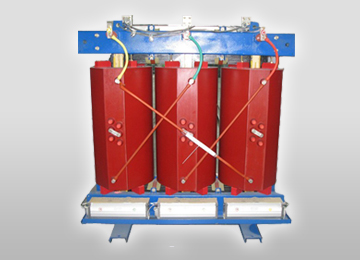
Encapsulated in epoxy resin under vacuum, these transformers offer zero risk of flammability, exceptional moisture resistance, and extreme physical durability. Ideal for high-humidity coastal hospitals, cleanrooms, and mobile field hospitals.
OEM Enclosed Isolated Power Supply Panels
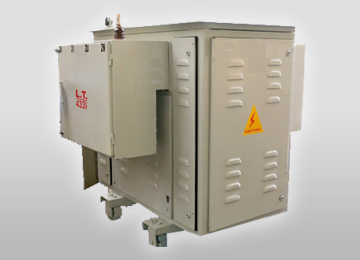
Turnkey floor-mounted or wall-mounted enclosures (IP23 to IP54 rating) combining the medical isolation transformer, main circuit breakers, insulation monitoring units, load monitoring relays, and remote alarm indicator panels into a single pre-tested assembly.
4. Global Healthcare Procurement Trends & Future Technical Insights (2024–2030)
Based on deep search intent analysis across global healthcare engineering networks, EPC contractors, and biomedical procurement managers, transformer purchasing decision-makers are prioritizing four major technological shifts:
A. Smart IT Power Systems & IoT Integration
Traditional medical isolation transformers relied on passive monitoring. Modern hospital infrastructure requires real-time diagnostic integration. Today's procurement guidelines demand transformers fitted with digital sensors communicating via Modbus RTU or BACnet protocol to central Building Management Systems (BMS). URJA’s medical isolation units seamlessly integrate with advance IMD systems, allowing hospital biomedical engineers to track leakage current trends, insulation degradation, and transformer load levels remotely.
B. Decarbonization & Eco-Design Efficiency Directives
Hospitals operate 24/7/365, making continuous transformer core losses (no-load losses) a substantial contributor to annual facility energy budgets. Future-ready procurement frameworks favor high-efficiency core materials like amorphous metals or top-tier cold-rolled grain-oriented (CRGO) silicon steel. URJA's optimized core structures deliver up to 35% lower no-load losses compared to standard market alternatives, directly contributing to green building certifications (LEED / BREEAM).
C. Mitigation of High Harmonic Loads in Modern Surgical Suites
The proliferation of non-linear power supplies in modern digital ORs—such as high-definition imaging towers, LED surgical lights, robotic surgery consoles (e.g., da Vinci systems), and electrosurgical generators—injects high-order harmonics (3rd, 5th, 7th, 9th) back into the isolated power system. Standard transformers experience severe thermal overheating when subjected to harmonic distortion. URJA Medical Isolation Transformers are engineered with K-factor rating capability (K-4 to K-13) and customized conductor geometries to prevent harmonic overheating and voltage waveform distortion.
5. Enterprise Strengths: Why Global Healthcare Projects Trust URJA Techniques
Founded in 1996 in Mumbai, India, URJA Techniques India Pvt. Ltd. has established an unshakeable reputation as a technocrat-led manufacturer specializing in high-reliability transformers. Our credentials reflect rigorous adherence to international engineering standards and continuous quality refinement.
National Award Winner
Recognized with the prestigious National Award 2008 for Outstanding Entrepreneurship in industrial equipment manufacturing.
CPRI & ERDA Certified
Type-tested at premier independent laboratories (CPRI & ERDA) for dynamic short-circuit withstand and lightning impulse test capability.
Global Footprint
Trusted exporter supplying high-spec transformers across Asia, the Middle East, Africa, Europe, and South America since 1996.

Every medical isolation transformer manufactured at URJA undergoes strict 100% routine quality testing prior to dispatch, including insulation resistance tests, turn ratio and polarity verification, separate-source AC withstand voltage testing, induced overvoltage testing, winding resistance measurement, and no-load leakage current validation.
6. Frequently Asked Questions (FAQ) for Global Procurement Engineers
Below are technical answers to the most common queries raised by hospital consultants, biomedical engineers, and global procurement managers when evaluating Medical Isolation Transformers.
- • Measurement of winding resistance and voltage transformation ratio
- • Phase displacement and vector group checks
- • Short-circuit impedance (Ucc) and load loss measurement
- • No-load loss and no-load current (I0) verification
- • Separate-source AC high-voltage dielectric withstand (4.8 kV AC)
- • Induced overvoltage testing and Insulation Resistance (IR) test
- • Enclosure leakage current and electrostatic shield continuity test