
In modern industrial manufacturing, power generation, and utility distribution grids, the demand for ultra-reliable voltage transformation has elevated the Oil Cooled Power Transformer into a mission-critical asset. Modern power networks demand high dielectric strength, superior thermal dissipation, and minimal operational downtime under extreme ambient temperatures and continuous loading. When international procurement teams evaluate high-voltage transformers, questions typically center on short-circuit withstand integrity, cooling class dynamics (ONAN/ONAF), losses capitalization formulas, and compliance with stringent standards like IEC 60076, IS 2026, and ANSI C57.
This technical guide—authored from the perspective of lead electrical design engineers and senior procurement strategists at URJA Techniques India Pvt. Ltd.—provides an exhaustive, data-backed analysis of oil-immersed power transformers. Designed to offer substantial Information Gain beyond basic catalog sheets, this document addresses real-world engineering constraints, failure mode mitigation, and future-ready digital integration strategies for global procurement officers.
Executive Procurement Insight
When procuring an Oil Cooled Power Transformer, upfront equipment purchase cost typically accounts for less than 15% of its total lifetime expenditure. Energy losses (No-Load Losses and Load Losses) over a typical 30-year operational lifecycle account for over 75% of total cost. Selecting optimized Cold-Rolled Grain-Oriented (CRGO) steel cores and electrolytic grade copper windings dramatically accelerates ROI.
1. Engineering Architecture & Product Recommendations
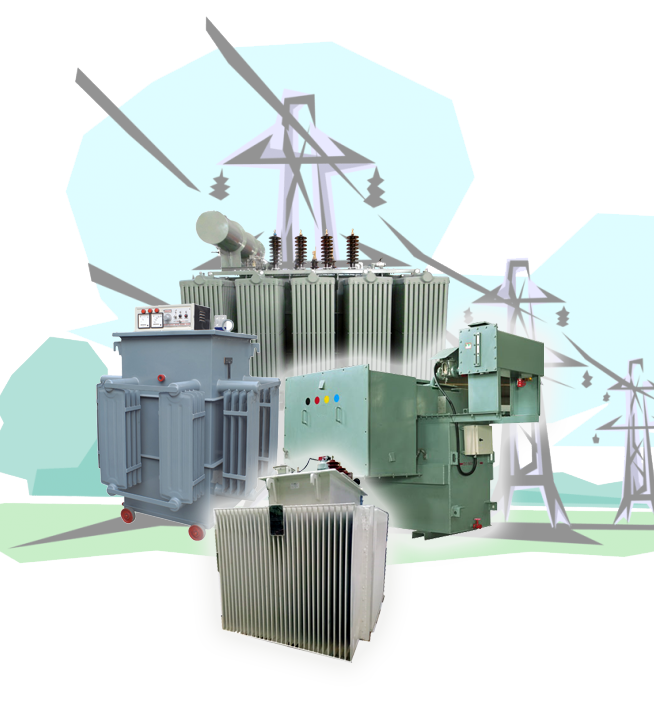
URJA Techniques India Pvt. Ltd. manufactures a wide array of liquid-immersed step-up and step-down transformers engineered to withstand dynamic mechanical stress during external short circuits. The selection of an Oil Cooled Power Transformer must be meticulously aligned with the specific operational environment, load profile, and utility grid parameters.
Key Product Portfolio & Structural Classifications
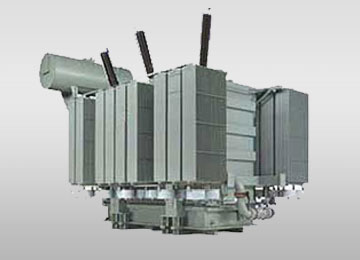
Industrial Power Transformers
Designed for heavy continuous industrial loads up to 10 MVA, 33 kV. Features inner and outer low-voltage winding sections with high-voltage pancake or helical coils for maximum short-circuit strength.
Contact Us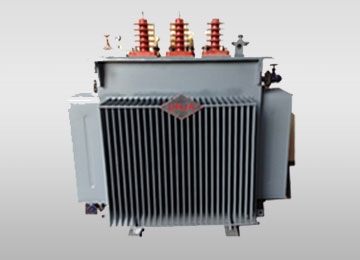
Hermetically Sealed Oil Transformers
Zero conservator atmosphere-contact design. Corrugated fins accommodate thermal oil expansion, preventing oxygen contamination and moisture ingress into the insulating fluid.
Contact Us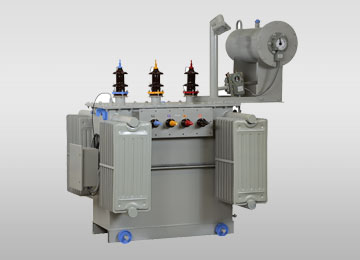
Power Distribution Transformers
High-efficiency step-down units ideal for municipal networks, commercial complexes, and industrial parks requiring low stray losses and whisper-quiet decibel levels.
Contact Us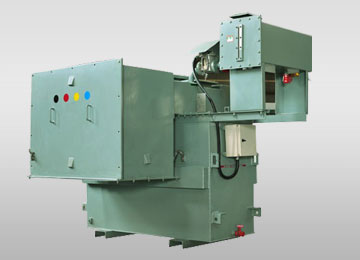
Neutral Earthing Transformers
Utilizing Zig-Zag (Interstar) winding configuration to establish a neutral point in ungrounded 3-phase systems, providing low zero-sequence impedance during fault conditions.
Contact UsTechnical Specifications Matrix
Below is the standard engineering baseline for URJA's oil-immersed power transformers up to 10 MVA, 33 kV voltage class:
| Parameter | Technical Specification Range | Engineering Standard / Benchmark |
|---|---|---|
| KVA / MVA Rating | 100 KVA to 10,000 KVA (10 MVA) | IEC 60076-1 / IS 2026 |
| Primary Voltage Class | 11 kV, 22 kV, 33 kV (Custom up to 33 kV) | Highest System Voltage (Um) up to 36 kV |
| Secondary Voltage Class | 415V, 3.3 kV, 6.6 kV, 11 kV | Star / Delta With Neutral Provision |
| Cooling Designation | ONAN (Oil Natural Air Natural) / ONAF (Air Forced) | IEC 60076-2 Temperature Rise Limits |
| Core Material | High-Grade Cold Rolled Grain Oriented (CRGO) Silicon Steel | M4, Prime Grade MOH / Laser-Scribed Steel |
| Conductor Material | Electrolytic Grade Copper / High-Conductivity Aluminium | Paper Insulated Rectangular Conductor (PICC) |
| Tap Changer Options | Off-Circuit Tap Changer (OCTC) / On-Load Tap Changer (OLTC) | +5% to -15% in steps of 1.25% or 2.5% |
| Insulation Class | Class A (105°C thermal limit) | Mineral Oil / Synthetic Ester Fluid |
| Type Test Certifications | Short-Circuit Withstand & Impulse Test Certified | Tested at CPRI (Govt. of India) & ERDA |
2. Technical Provenance & Corporate Expertise (E-E-A-T)
Google’s Quality Rater Guidelines heavily emphasize Experience, Expertise, Authoritativeness, and Trustworthiness (E-E-A-T) for high-stakes industrial equipment choices. Evaluating a manufacturer requires verifying independent lab certifications, manufacturing history, and robust quality management controls.

National Award Winner for Manufacturing Excellence
URJA Techniques India Pvt. Ltd. was honored with the prestigious National Award 2008 for Outstanding Entrepreneurship, demonstrating continuous design innovation and quality assurance in industrial power transformer manufacturing.
Why Global Buyers Trust URJA Techniques (Established 1996)
Founded in 1996 by visionary technocrats in Mumbai, URJA Techniques India Pvt. Ltd. has grown into a premier manufacturer and exporter of heavy-duty transformers. Our facilities in Wadala (Mumbai) and MIDC Rabale (Navi Mumbai) reflect decades of engineering refinement:
- Rigorous Independent Testing (CPRI & ERDA): URJA transformers have undergone dynamic short-circuit withstand tests at the Central Power Research Institute (CPRI) and Electrical Research and Development Association (ERDA). In-house laboratories conduct full impulse withstand tests up to 200 kV BIL.
- ISO 9001:2015 Quality Management Systems: Raw materials—ranging from prime CRGO laminations to high-purity insulating oils—undergo incoming quality inspection (IQI), helium vacuum leak detection, and precision winding tension monitoring.
- Custom-Engineered Core & Coil Assembly: To withstand electrodynamic forces generated during downstream line faults, our cores are built using step-lap mitred joints, minimizing no-load currents and magnetizing losses.
- Proven Global Export Footprint: URJA exports engineered transformers across Asia, the Middle East, Africa, and Latin America, complying seamlessly with international logistics, tropicalized insulation packaging, and site installation supervision.
State-of-the-Art Production Facility
Our Navi Mumbai factory features automated coil winding machinery, high-vacuum oil impregnation plants, automatic temperature-controlled baking ovens, and computerized final test bays.
3. Future Procurement Trends & Industry Outlook (2025–2035)
The global market for liquid-immersed transformers is undergoing a paradigm shift driven by grid decarbonization, integration of utility-scale solar/wind renewables, and stringent eco-design regulations. Procurement officers must anticipate several macro-technological trends when finalizing specifications over the coming decade.
1. Eco-Friendly Bio-Degradable Ester Oils vs. Mineral Oil
While traditional mineral transformer oil remains the industry benchmark due to low cost and proven dielectric properties, procurement trends reflect a rapid rise in Natural and Synthetic Ester Fluids (such as FR3 fluid). Ester oils offer a fire point >300°C (Class K insulation rating), virtually eliminating substation fire hazards and enabling compact installation near urban centers. Furthermore, ester liquids are 100% biodegradable within 28 days, preventing soil contamination in environmentally sensitive zones.
2. Transition to Smart Transformers & IoT Diagnostic Integration
Modern power grids rely on predictive asset management rather than reactive maintenance schedules. Next-generation oil cooled power transformers are increasingly specified with online Dissolved Gas Analysis (DGA) sensors, fiber-optic real-time winding temperature indicators (WTI), and smart Buchholz relays with digital Modbus/IEC 61850 communications. This allows asset managers to monitor hydrogen, acetylene, and moisture levels remotely, preventing catastrophic failure months before insulation breakdown occurs.
3. Capitalization of Losses (Total Cost of Ownership Model)
Global utilities and industrial plants are shifting from minimum-purchase-price bidding to Total Cost of Ownership (TCO) evaluation models. By capitalizing losses using the formula:
Total Evaluated Cost (TEC) = Purchase Price + (A × No-Load Loss in kW) + (B × Load Loss in kW)
where A and B represent monetary values per kilowatt over the transformer’s expected lifetime ($3,000–$8,000/kW for No-Load losses), procurement managers prioritize low-loss laser-scribed CRGO core designs that pay for themselves within 24 to 36 months of continuous operation.
4. Technological Innovations in Oil Cooled Transformers
Transformer manufacturing has evolved beyond conventional assembly into high-precision thermal and electromagnetic modeling. URJA’s engineering team incorporates advanced computational techniques to maximize structural durability and operating efficiency.
Electromagnetic & Thermal Finite Element Analysis (FEA)
Using 3D FEA software, URJA engineers simulate magnetic flux leakage, stray losses in structural steel clamp frames, and hotspot temperature locations within the winding layers. This modeling allows us to optimize oil duct placement, ensuring uniform ONAN oil circulation and eliminating localized thermal degradation of pressboard insulation.
Dynamic Short-Circuit Stress Resistance
During a short circuit, axial and radial forces can exert hundreds of kilonewtons of pressure onto the transformer coils. URJA utilizes high-density pre-compressed pressboard blocks, radially rigid winding mandrels, and automated coil clamping rings to maintain constant mechanical pre-stress. This design guarantees zero mechanical deformation during short-circuit grid disturbances, as validated by CPRI testing.
5. Frequently Asked Questions (Procurement & Technical FAQ)
Based on recurring technical queries submitted by international EPC contractors, utility project managers, and AI search intent logs, we address the critical questions surrounding oil cooled power transformer specification and procurement.
Key specification criteria include: (1) Rated Capacity (KVA/MVA) and overload requirements, (2) Voltage Class and Vector Group (e.g., Dyn11, YNd11), (3) Cooling Type (ONAN, ONAF), (4) Maximum allowable No-Load and Load Losses per IEC/IS limits, (5) Tap Changer specifications (Off-Circuit vs. On-Load with Remote Tap Changing Control panel), (6) Short-Circuit Withstand Capability certification, and (7) Environmental conditions (altitude, ambient temp, pollution level).
ONAN (Oil Natural Air Natural): Coolant oil circulates naturally through thermosiphon action, and heat dissipates through radiator fins via natural air convection. Ideal for baseline ratings.
ONAF (Oil Natural Air Forced): External cooling fans blow forced air across radiator surfaces, increasing thermal dissipation and allowing the transformer to handle up to 25–33% higher load capacity continuously without exceeding temperature rise limits.
Independent laboratory testing at CPRI (Central Power Research Institute) or ERDA subjects the transformer to extreme dynamic short-circuit currents and high-voltage lightning impulses (BIL). CPRI certification proves that the internal coil structure, clamping mechanisms, and bushings will not deform or collapse mechanically under real-world grid short circuits, safeguarding your plant against catastrophic downtime.
With proper insulation maintenance and oil quality monitoring, an oil cooled power transformer has an operational lifespan of 30 to 40 years. Lifespan is maximized by preventing moisture and oxygen ingress (using silica gel breathers or nitrogen cushions), maintaining dielectric Breakdown Voltage (BDV > 60 kV), and preventing sustained overload conditions that degrade paper insulation.
An Off-Circuit Tap Changer (OCTC) requires the transformer to be completely de-energized before adjusting voltage ratio taps. An On-Load Tap Changer (OLTC) permits continuous voltage regulation under live load conditions automatically using an automatic voltage regulator (AVR) relay, essential for networks with fluctuating input voltages.
100% of URJA transformers undergo routine testing per IEC 60076 / IS 2026: (1) Winding resistance measurement, (2) Voltage ratio and phase vector verification, (3) Impedance voltage and load loss measurement, (4) No-load loss and current measurement, (5) Separate-source AC withstand voltage test, (6) Induced overvoltage withstand test, and (7) Oil Dielectric Breakdown Voltage (BDV) and moisture test.
Request a Customized Engineering Quote
Need precise engineering drawings, tender specification assistance, or competitive export pricing for an Oil Cooled Power Transformer? Contact URJA Techniques' senior transformer engineering team today.