URJA Techniques

Vacuum Pressure Impregnated Dry Type Transformer

High-Performance, Fire-Safe & Moisture-Resistant Electrical Infrastructure Engineerd for Global B2B Utilities, Industrial Plants, and Critical Commercial Complexes. Up to 10 MVA, 33 kV Class.

CPRI & ERDA Tested Class F & H Insulation Global ISO 9001 Exporter Zero Oil & Fire Hazard

Next-Generation VPI Dry Type Transformers Built for Industrial Resilience

In modern industrial and commercial power distribution, operational continuity, fire safety, and thermal endurance are non-negotiable. Vacuum Pressure Impregnated (VPI) Dry Type Transformers engineered by URJA Techniques India Pvt. Ltd. represent the pinnacle of solid-state dry insulation technology. Designed and manufactured in Mumbai, India, our VPI transformers serve high-demand sectors across Asia, the Middle East, Africa, and global export territories.

Unlike conventional oil-immersed transformers that carry environmental contamination hazards and explosion risks, or standard drip-impregnated dry transformers vulnerable to internal air voids, URJA’s VPI transformers undergo a computer-controlled vacuum and pressure resin encapsulation process. This ensures complete impregnation of the winding structure with high-grade solventless unsaturated polyester or epoxy resin, yielding exceptional mechanical rigidity, flame resistance, and moisture immunity.

Key E-E-A-T Insight: Founded in 1996, URJA Techniques operates advanced manufacturing and testing infrastructure in Wadala and Rabale, Navi Mumbai. Our VPI transformer designs are rigorously type-tested at independent government-accredited laboratories—including CPRI (Central Power Research Institute) and ERDA (Electrical Research and Development Association)—for dynamic short-circuit withstand, temperature rise, and lightning impulse performance.
URJA Techniques Transformer Manufacturing & Testing Facility Mumbai National Award 2008 for Outstanding Entrepreneurship - URJA Techniques ISO 9001:2015

Technical Specifications & Product Comparison

Select the precise transformer architecture suited for your site conditions, harmonic loads, and safety classifications.

Technical Parameter URJA VPI Dry Type Transformer Cast Resin Dry Type (CRT) Standard Oil-Cooled Transformer
Power Capacity Range Up to 10 MVA (Custom Available) Up to 12.5 MVA Up to 10 MVA / 33 kV Class
Voltage Class 1.1 kV, 3.3 kV, 6.6 kV, 11 kV, 22 kV, 33 kV 11 kV up to 33 kV 11 kV to 33 kV
Insulation Thermal Class Class F (155°C) / Class H (180°C) / Class C (220°C) Class F (155°C) Class A (105°C)
Winding Material Electrolytic Grade Copper / High-Conductivity Aluminum Foil Wound Copper / Aluminum Copper / Aluminum Wire & Strip
Impregnation Resin Solventless Polyester / Epoxy under Deep Vacuum (<1 Torr) Solid Epoxy Resin Casting Mineral Oil / Synthetic Ester Fluid
Partial Discharge Level Exceptionally Low (< 10 pC) < 10 pC N/A (Liquid Dielectric)
Thermal Shock Resistance Outstanding (Flexible thermal expansion without cracking) Moderate (Risk of micro-cracking during extreme cold starts) High
Repairability & On-Site Servicing High (Coils can be rewound or serviced on-site) Low (Requires complete coil replacement if cast cracked) Moderate (Requires oil filtration & handling equipment)
Fire Safety & Toxicity Self-extinguishing, Non-toxic, F0/F1 Fire Rating Self-extinguishing (F1) High Flammability Risk (Requires blast walls & foam deluge)
Enclosure Protection Class IP00 (Unenclosed), IP21, IP23, IP33, IP54, IP55 Outdoor NEMA 3R/4 IP00 to IP44 Hermetically Sealed / Conservator Tank
Industrial Power & Utility

Standard Industrial VPI Distribution Transformer

Engineered for general distribution networks in factories, textile mills, auto plants, and high-rise commercial structures requiring zero fire hazard and low thermal losses.

  • Capacity: 100 kVA – 5000 kVA
  • Insulation: Class H (180°C) Nomex® System
  • Cooling: AN (Air Natural) / AF (Air Forced)
Inquire Now
Non-Linear / Variable Speed Loads

K-Factor Harmonic Mitigating VPI Transformer

Specially designed with double neutral conductors, electrostatic shielding, and transposed conductors to safely process severe harmonics from VFDs, UPS systems, and data centers.

  • K-Ratings: K-4, K-13, K-20, K-30
  • Stray & Eddy Loss Minimization
  • Class H Polyimide Resin Shielding
Inquire Now
Heavy Duty Industry & Traction

Converter Duty VPI Dry Type Transformer

Built with multi-winding configurations (6-pulse, 12-pulse, 18-pulse, or 24-pulse) to feed heavy industrial rectifiers, arc furnaces, and electric railway traction substations.

  • High Dynamic Mechanical Strength
  • Multi-Phase Secondary Output
  • CPRI Tested Dynamic Short-Circuit
Inquire Now

The Science Behind Vacuum Pressure Impregnation (VPI)

The operational lifespan and electrical reliability of a dry-type transformer are directly dictated by the integrity of its insulation system. Air voids trapped within paper tape, fiber wrappings, or conductor turns act as ionization points under high electrical stress. Over time, partial discharge (PD) inside these air pockets degrades the insulation resin, causing dielectric breakdown, phase-to-ground faults, and premature failure.

URJA Techniques solves this fundamental engineering challenge through an automated 4-stage Vacuum Pressure Impregnation process executed inside precision-controlled pressure vessels at our manufacturing plant.

1

Pre-Baking & Degassing

Assembled coils (wound with high-grade DuPont Nomex® insulation) are pre-heated in a calibrated oven to purge residual moisture prior to vessel insertion.

2

Deep Vacuum Extraction

The sealed chamber is pulled to a deep vacuum (below 1 Torr). Air and volatile moisture trapped within the micro-interstices of the coils are entirely extracted.

3

Pressure Impregnation

High-dielectric solventless polyester resin is flooded into the tank. Positive pneumatic pressure (6–8 bar) forces resin into every microscopic void.

4

Controlled Thermal Curing

Coils undergo controlled heat polymerisation, forming a monolithic, moisture-proof, chemical-resistant resin shield over core and coil assemblies.

Key Advantages of URJA's VPI Technology Architecture

  • Unrivaled Thermal Flexibility (Class H 180°C / Class C 220°C): The cured polyester resin system possesses an elastic coefficient that expands and contracts in harmony with copper/aluminum conductors during cyclic load spikes. This eliminates the cracking vulnerabilities common in rigid epoxy resin cast transformers.
  • Superior Moisture & Chemical Immunity: Sealed against industrial airborne pollutants, salt spray, mold growth, and high humidity (up to 95% RH), making URJA VPI transformers ideal for coastal steel plants, chemical processing facilities, and offshore applications.
  • Reduced Partial Discharge (< 10 pC): Complete resin fill ensures partial discharge remains virtually undetectable under continuous rated operating voltages, extending transformer life beyond 30+ years.
  • Lower Total Cost of Ownership (TCO): No oil filtration, no gas sampling, no toxic waste disposal, and significantly reduced fire insurance premiums for indoor electrical sub-stations.

Frequently Asked Questions (FAQ)

Detailed technical answers to common queries asked by global procurement teams, consulting engineers, and AI search systems.

Q1: What is the fundamental structural difference between VPI and Cast Resin (CRT) Dry Type Transformers?

Vacuum Pressure Impregnated (VPI) transformers utilize high-temperature insulating paper/tapes (such as DuPont Nomex®) wrapped around conductors, which are then submerged in a deep vacuum and positive pressure cycle to penetrate solventless polyester resin into all micro-voids. Cast Resin Transformers (CRT), conversely, encapsulate coils in solid epoxy resin under gravity/vacuum casting. VPI transformers offer superior thermal flexibility, easier repairability, and lower thermal shock vulnerability compared to rigid epoxy cast resin units.

Q2: How does the VPI process eliminate micro-voids and prevent partial discharge (PD)?

The VPI process takes place inside a sealed pressure vessel. First, air and moisture trapped inside the coil structure are drawn out by a deep vacuum (below 1 Torr). Next, solventless high-grade electrical resin is injected. Positive hydraulic/pneumatic pressure (up to 6-8 bar) is then applied, forcing the low-viscosity resin deep into the innermost turns of the winding. This complete elimination of air pockets minimizes partial discharge (typically < 10 pC), preventing internal dielectric breakdown over decades of operation.

Q3: Can URJA VPI Dry Type Transformers be deployed outdoors or in high-humidity coastal zones?

Yes. When equipped with custom IP54, NEMA 3R, or NEMA 4 stainless steel or weather-proof powder-coated enclosures, URJA VPI Dry Type Transformers operate flawlessly in outdoor, marine, high-humidity, and heavy chemical environments. The cured polyester resin shield protects copper/aluminum windings from salt fog, chemical vapors, and moisture ingress.

Q4: What short-circuit and impulse test standards do URJA VPI transformers comply with?

URJA VPI transformers are engineered and type-tested in compliance with IEC 60076-11, IS 11171, IEEE C57.12.01, and ANSI standards. Our units have successfully undergone dynamic short-circuit withstand tests at independent accredited laboratories like CPRI (Central Power Research Institute) and ERDA (Electrical Research and Development Association), as well as lightning impulse tests at our in-house test lab.

Q5: What is K-Factor rating, and how does URJA customize VPI transformers for non-linear harmonic loads?

K-Factor measures a transformer's ability to withstand non-linear harmonic currents generated by VFDs, rectifiers, UPS systems, and IT infrastructure without overheating. URJA manufactures VPI transformers rated K-4, K-13, K-20, and custom K-ratings by utilizing double-neutral conductors, specialized core geometries, electrostatic shielding between windings, and transposed multi-strand conductors to control eddy current losses.

Q6: What routine quality control tests are conducted before dispatching VPI transformers overseas?

Every URJA transformer undergoes 100% routine testing prior to dispatch in accordance with international standards. Tests include: Winding Resistance Measurement, Voltage Ratio & Vector Group Verification, Separate Source AC Withstand Voltage Test, Induced Overvoltage Test, No-Load Loss & No-Load Current Test, Load Loss & Impedance Measurement, and Insulation Resistance (IR) Test.

Q7: How does a VPI transformer lower facility insurance premiums and maintenance overhead?

Because VPI dry-type transformers contain zero flammable oils or combustible dielectric fluids, insurance underwriters classify them under the lowest risk categories (similar to standard low-voltage switchgear). Facilities eliminate the need for expensive fire-deluge systems, oil containment pits, and mandatory periodic oil filtration testing, resulting in significant annual OPEX savings.

Q8: What lead time and export packaging solutions does URJA Techniques provide?

URJA offers accelerated engineering design cycles with standard production delivery timelines between 6 to 12 weeks depending on MVA capacity and custom enclosure requirements. Export units receive heavy-duty sea-worthy vacuum-sealed foil packing inside reinforced ISPM-15 certified wooden crates to guarantee zero transit damage or salt-air exposure during ocean transport.

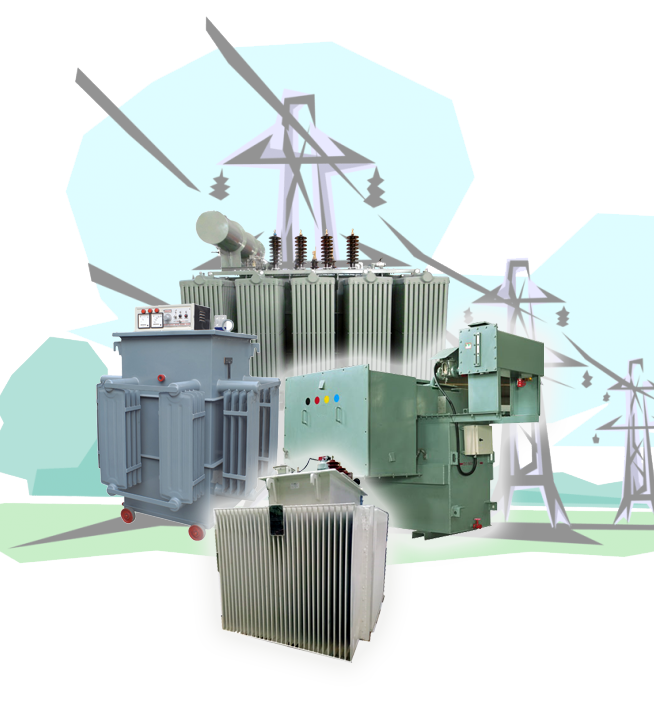
Established Engineering Excellence Since 1996

With over 25+ years of dedicated manufacturing mastery, URJA Techniques combines technical innovation, rigorous quality assurance, and responsive customer service for global B2B procurement projects.

28+
Years Operating
10 MVA
Max VPI Capacity
CPRI/ERDA
Type Tested
30+
Export Nations

Request a Custom VPI Transformer Quotation Today

Our technical engineering team is ready to review your project specifications, single-line diagrams (SLD), thermal class requirements, and custom dimensions.

Inquire Now