1. Executive Technical Overview: Sourcing Power Distribution Transformers
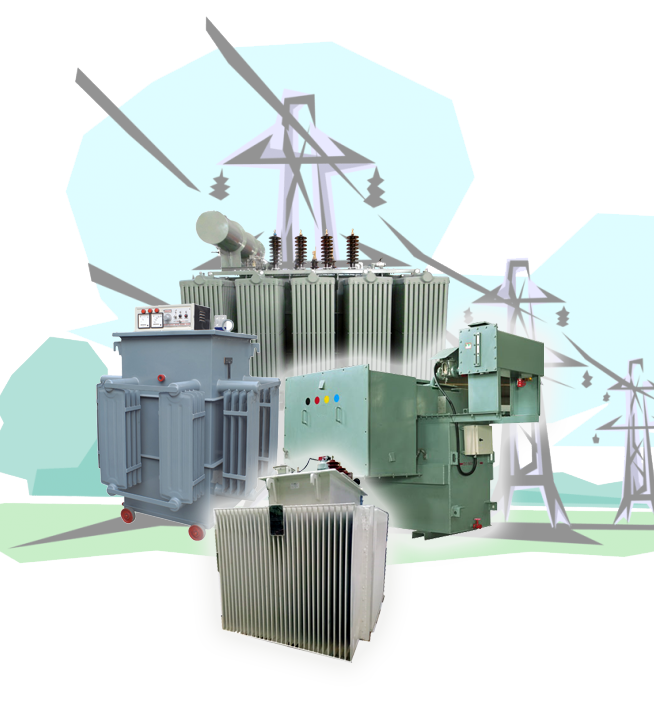
In modern electrical grid distribution and heavy industrial infrastructure, the Power Distribution Transformer acts as the critical power conversion nexus. Positioned downstream of high-voltage transmission networks, these static electromagnetic devices step down medium primary distribution voltages (such as 33 kV, 22 kV, 11 kV, or 6.6 kV) to secondary utilization voltages (such as 415V, 433V, or 600V), delivering stable 3-phase power directly to manufacturing facilities, commercial complexes, process plants, and localized distribution grids.
At URJA Techniques India Pvt. Ltd., we approach the manufacturing of power distribution transformers through technocrat-driven precision. Founded in 1996 in Mumbai, URJA has engineered custom step-down and step-up units capable of continuous duty cycle under rigorous environmental conditions. When global procurement officers, electrical consultants, and EPC contractors evaluate transformer suppliers, the core focus centers on minimizing the Total Cost of Ownership (TCO) by optimizing no-load core losses ($P_0$), load copper losses ($P_k$), thermal dissipation, and short-circuit mechanical robustness.
Strategic Engineering Note on Core Loss Reduction
URJA's power distribution transformers incorporate high-grade Cold Rolled Grain Oriented (CRGO) silicon steel laminations (M4, ZH100, or Hi-B domain refined) stacked with step-lap mitred joints. This specific core assembly geometry minimizes magnetic hysteresis and eddy currents, lowering no-load losses by up to 18% compared to standard conventional butt-joint cores.
Key Engineering Specifications Matrix
The table below outlines the default technical parameter matrix for URJA's oil-filled and dry-type power distribution transformers up to 10 MVA rating:
| Technical Parameter |
Standard Specification Range |
Engineering Standard Compliance |
| KVA / MVA Rating |
100 kVA up to 10,000 kVA (10 MVA) |
IEC 60076-1 / IS 2026 Part I |
| Primary Voltage Class |
3.3 kV, 6.6 kV, 11 kV, 22 kV, 33 kV |
IEEE C57.12.00 / ANSI standards |
| Secondary Voltage Class |
400V, 415V, 433V, 6.6 kV, 11 kV |
Custom tailored for motor/grid load |
| Vector Group |
Dyn11, Dyn5, Ynd11, Star-Star, Zig-Zag |
IEC Vector Notation Standard |
| Insulation & Cooling Medium |
Mineral Oil (Class I/II), Ester Oil, CRT/VPI Dry Type (Class H/F) |
IEC 60296 (Oil) / IEC 61099 (Ester) |
| Cooling Designation |
ONAN, ONAF, KNAN, KNAF, AN, AF |
Natural & Forced Air/Fluid circulation |
| Tapping Arrangement |
Off-Circuit Tap Changer (OCTC) ±5% to ±10% / On-Load Tap Changer (OLTC) with AVR |
High-speed vacuum or oil tap changer |
| Short-Circuit Withstand |
Type-tested for 2-second dynamic & thermal short-circuit withstand at CPRI & ERDA |
IEC 60076-5 / IS 2026 Part V |
2. Technical Product Recommendation Matrix for Global Procurement
Selecting the ideal power distribution transformer depends heavily on installation environment, duty cycle, safety classification, and environmental ambient parameters. Below are URJA’s primary recommended product lines designed to satisfy specific industrial purchasing intents:
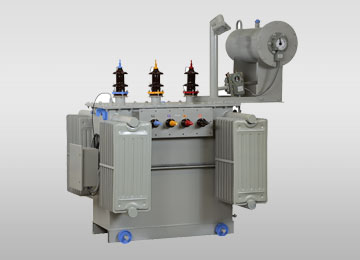
Oil-Immersed Power Distribution Transformer
Capacity: Up to 10 MVA | 33 kV
Heavy-duty liquid-immersed step-down transformer engineered with pancake coils, multi-layer disc windings, and pressed steel radiators. Ideal for outdoor utility substations, industrial plants, and steel mills.
Technical Specs
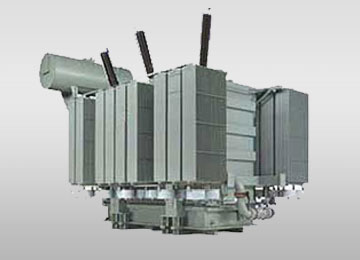
Substation Power Transformer
Capacity: 2.5 MVA to 10 MVA | OLTC Integration
Configured with inner and outer low-voltage winding sections, dynamic short-circuit reinforcement, and automatic voltage regulation (AVR) for heavy continuous factory demand.
Technical Specs
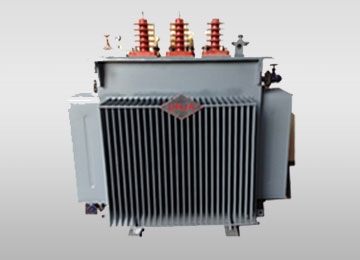
Hermetically Sealed Distribution Transformer
Maintenance-Free | Zero Atmosphere Contact
Eliminates the oil conservator by utilizing elastic corrugated cooling fins that flex under thermal expansion. Completely sealed dielectric tank prevents fluid oxidation and moisture ingress.
Technical Specs
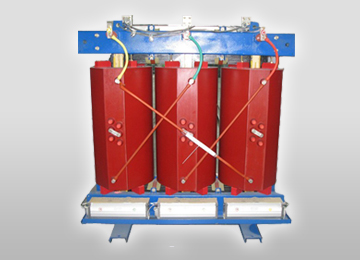
Cast Resin Dry Type (CRT) Transformer
Class F/H Insulation | Fire Safe
Primary and secondary windings fully cast in epoxy resin under high vacuum. Self-extinguishing, flame-retardant, and non-polluting design ideal for high-rise commercial structures, hospitals, and indoor mines.
Technical Specs
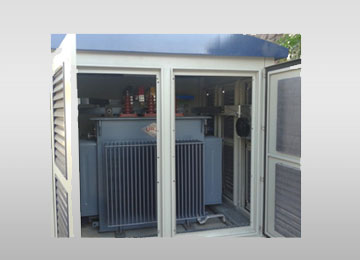
Unitized Compact Substation
Integrated Packaged Power System
Includes medium voltage ring main unit (RMU), power distribution transformer, and low voltage switchgear panel within a weather-proof enclosure. Fully factory pre-commissioned.
Technical Specs
Converter Duty Power Distribution Transformer
Multi-Winding | Solar & Wind Dedicated
Specialized step-up/step-down distribution units featuring multiple secondary windings to interface with 6-pulse, 12-pulse, or 24-pulse solar PV inverters and variable frequency drives (VFDs).
Technical Specs
3. Global Sourcing Trends & Technological Evolution (2025–2035)
The global market for power distribution transformers is undergoing a fundamental transformation driven by electrical grid modernization, renewable energy integration, decarbonization mandates, and strict efficiency frameworks (such as EU EcoDesign Tier 2, US DOE 2016 standards, and IS 1180 Energy Efficiency Levels). Buyers must factor these mega-trends into their technical procurement strategies:
1. Biodegradable Ester Dielectric Fluids (FR3 & Synthetic Esters)
Traditional mineral oils are increasingly being replaced by natural esters (derived from vegetable oils) and synthetic esters. Ester fluids feature fire points exceeding 300°C (K-class qualification), rendering transformers virtually non-flammable. Additionally, esters are 100% biodegradable within 28 days, making them mandatory for environmentally sensitive sites near water reservoirs or urban infrastructure.
2. IoT Sensorization & Smart Transformer Integration
Modern distribution transformers are shifting from passive equipment to intelligent smart grid nodes. Sourcing demands now specify real-time online Dissolved Gas Analysis (DGA) sensors, fiber-optic winding temperature indicators (WTI), moisture-in-oil monitoring, and automated health index algorithms linked via IEC 61850 protocol to SCADA systems.
3. Bi-Directional Power Flow & Renewable Harmonic Resilience
With rooftop solar PV, battery energy storage systems (BESS), and EV fast-charging stations feeding power back into local distribution lines, transformers must withstand bi-directional voltage fluctuations, severe DC bias injection, and high total harmonic distortion (THD). Custom K-factor rated transformers prevent overheating caused by skin effect and stray eddy losses in harmonic-dense environments.
4. Amorphous Core & Ultra-Low Loss Standards
To eliminate continuous grid standby losses, utility buyers are transitioning to Amorphous Metal Alloy cores. Amorphous metal ribbons lack a crystalline structure, resulting in up to 70% lower core hysteresis loss compared to conventional silicon steel, significantly reducing lifetime carbon footprint.
5. Frequently Asked Procurement & Engineering Questions (FAQ)
Below are deep technical answers addressing the most frequent questions raised by electrical consultants, procurement heads, and AI engine queries regarding power distribution transformers:
How do I accurately size a Power Distribution Transformer for heavy motor loads?
Accurate sizing requires calculating total continuous active load (kW) and reactive load (kVAR), factoring in power factor ($\cos \phi$), motor efficiency ($\eta$), diversity factor, and a 20–25% future growth margin. Furthermore, for large Direct-On-Line (DOL) motors, starting kVA (which can be 6 to 7 times nominal kVA) must be evaluated to ensure that the transformer impedance ($Z\%$) does not cause an excessive secondary voltage dip beyond 10-15% during motor startup.
What is the functional difference between ONAN, ONAF, and KNAN cooling designations?
ONAN (Oil Natural Air Natural): Relies on natural oil thermal siphon action inside the tank and natural ambient air convection across external radiator fins.
ONAF (Oil Natural Air Forced): Adds electric cooling fans directed at the radiator tubes, boosting heat transfer and temporarily increasing transformer continuous load capacity by 15% to 25%.
KNAN: Uses non-flammable synthetic or natural ester dielectric fluid (K-class, flash point >300°C) with natural fluid and natural air circulation, dramatically elevating fire safety in enclosed substations.
Why is Dyn11 the preferred vector group for 3-phase power distribution transformers?
The Dyn11 vector group features a Delta-connected high voltage primary winding and a Star-connected low voltage secondary winding with an accessible neutral, where the secondary phase voltage lags primary phase voltage by 30 degrees (11 o'clock position). The primary Delta winding traps 3rd, 9th, and 15th zero-sequence harmonic currents generated by non-linear loads, preventing harmonic pollution from travelling upstream into the main utility grid. Meanwhile, the secondary Star connection provides a reliable 4-wire supply (L1, L2, L3, N) for both single-phase lighting loads and 3-phase motor power.
How does ester fluid insulation extend solid insulation paper life compared to mineral oil?
Ester fluids possess a significantly higher moisture saturation limit (approx. 2,700 ppm at 20°C) compared to mineral oil (approx. 55 ppm). As paper insulation ages and releases water molecules, ester fluid scavenges and holds this moisture in solution rather than depositing it onto the cellulose paper. By keeping paper moisture content exceptionally low, thermal degradation and depolymerization of the Kraft paper are retarded, extending solid insulation life by up to 2 to 3 times under continuous thermal stress.
What type testing is mandatory under IEC 60076 to guarantee dynamic short-circuit withstand?
Under IEC 60076-5 and IS 2026 Part V, a transformer must undergo a physical Dynamic Short-Circuit Withstand Test at an accredited independent test lab (such as CPRI or ERDA). During this severe test, full asymmetrical peak short-circuit currents are applied across the terminals for up to 2 seconds. Post-test verification requires proving that winding reactances ($X_d$) have not shifted by more than 2% and that internal coil structures suffered zero mechanical deformation or insulation displacement. URJA transformers have successfully cleared these tests up to 10 MVA rating.
How do non-linear loads and harmonics impact transformer K-factor and de-rating?
Non-linear loads such as variable frequency drives (VFDs), UPS systems, and arc furnaces inject harmonic currents that drastically increase high-frequency eddy current losses in windings and stray losses in core structural clamps. Standard transformers operating under heavy harmonics will experience localized thermal hotspots and premature insulation breakdown. A custom engineered K-factor rated transformer (K-4, K-13, or K-20) employs double-neutral conductors, electrostatic copper shielding between windings, and specialized multi-strand transposed conductors to safely handle harmonic heating without de-rating capacity.
What are the Total Cost of Ownership (TCO) trade-offs between Dry Type and Oil-Filled transformers?
While Cast Resin Dry Type (CRT) transformers carry a 20-35% higher initial procurement cost than oil-filled units, dry type transformers require zero oil monitoring, zero containment bund walls, no fire suppression deluge systems, and carry lower insurance premiums for indoor factory floor placement. Oil-filled transformers, conversely, offer lower initial capital expenditure and superior natural cooling efficiency for high MVA outdoor substations. A complete TCO analysis evaluates capital expenditure, capitalized cost of no-load/load losses over 25 years, civil foundation costs, and routine maintenance overhead.
6. Actionable RFQ Specification Checklist for Global Buyers
To receive a rapid, accurate engineering design quote for your power distribution transformer project, submit your technical requirements with the parameters detailed in the checklist below:
- Nominal Capacity: Rated kVA / MVA (e.g., 500 kVA, 1250 kVA, 2500 kVA, 5000 kVA, 10 MVA).
- Primary & Secondary Voltages: Input kV rating and step-down output V/kV rating.
- Vector Group & Phase: Dyn11, Dyn5, Ynd11, 3-Phase 50Hz or 60Hz.
- Tapping Requirement: Off-Circuit Tap Changer (OCTC) or On-Load Tap Changer (OLTC) with AVR panel.
- Cooling & Fluid Spec: ONAN, ONAF, KNAN, Class I Mineral Oil, or Natural Ester Fluid (FR3).
- Loss Evaluation Limits: Specified maximum allowable No-Load Loss ($P_0$ in Watts) and Load Loss ($P_k$ in Watts) or Energy Level compliance (IS 1180 Level 1/2/3, EcoDesign Tier 2).
- Environmental Ambient: Maximum ambient temperature (°C), altitude above sea level, humidity, and seismic zone rating.
- Special Accessories: Buchholz Relay, Oil Temperature Indicator (OTI), Winding Temperature Indicator (WTI), Pressure Relief Device (PRD), Magnetic Oil Gauge (MOG), Marshalling Box.
Ready to Procure Custom Power Distribution Transformers?
Speak directly with URJA's senior transformer design technocrats. Get technical datasheets, CAD dimensional drawings, and competitive commercial quotes within 24 hours.