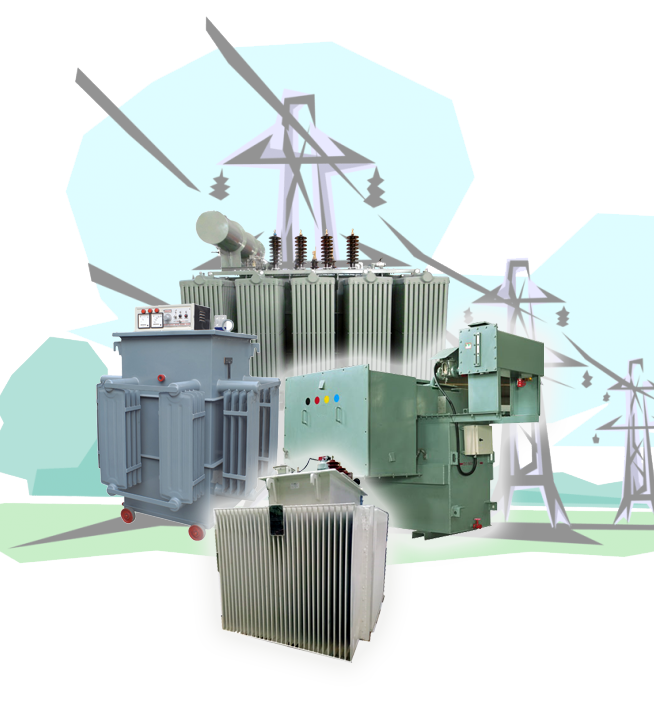
Technical Deep Dive
The Engineering Architecture of Cast Resin Dry Type Transformers
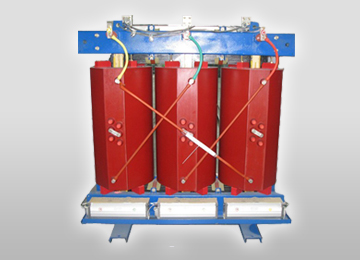
In modern industrial grid design, electrical engineers and global B2B procurement managers face growing pressures to replace traditional liquid-immersed transformers with safer, eco-friendly, and zero-maintenance alternatives. The Cast Resin Dry Type Transformer (CRT) has emerged as the global benchmark for safety-critical power distribution. Unlike liquid-filled transformers that utilize mineral oil or synthetic ester fluids for cooling and dielectric strength, Cast Resin Dry Type Transformers employ solid epoxy resin insulation for the high-voltage (HV) windings, cast inside advanced vacuum chambers to completely eliminate air voids, moisture penetration, and partial discharge risks.
At URJA Techniques India Pvt. Ltd., our Cast Resin Dry Type Transformers are engineered up to 10 MVA capacity and 33 kV voltage class in full compliance with international standards including IEC 60076-11, IS 11171, IEEE C57.12.01, and ANSI benchmarks. Engineered with Class F (155°C) or Class H (180°C) thermal insulation systems, these transformers provide total operational security in enclosed, moisture-prone, high-humidity, and fire-sensitive environments. The solid epoxy matrix filled with silica flour imparts extraordinary mechanical strength capable of enduring extreme radial and axial electrodynamic forces caused by sudden external short circuits.
F1 Fire Performance Rating
Self-extinguishing epoxy resin compound prevents combustion. Zero emission of toxic gases or thick black smoke during localized fire exposure, ensuring safe indoor substation placement.
E2 Environmental Class
Resistant to heavy ambient pollution, chemical vapors, airborne dust, and high relative humidity (>95%). Designed for harsh marine, coastal, and heavy chemical industrial zones.
C2 Climatic Resistance
Operates reliably down to -25°C ambient temperature. Suitable for extreme arctic conditions as well as high-temperature tropical desert installations without insulation cracking.
Product Recommendations
Product Spectrum: Customized Cast Resin Solutions
Understanding user intent and site-specific load characteristics is essential when selecting a Cast Resin Dry Type Transformer. URJA Techniques manufactures a diversified portfolio tailored to distinct operational profiles, varying load cycles, harmonic spectra, and outdoor/indoor IP protection enclosures.
Cast Resin Dry Type Distribution Transformer (100 kVA to 3.15 MVA)
Designed for commercial complexes, hospital infrastructure, airport terminals, and residential towers where human safety and fire mitigation are paramount. Features low no-load losses, optimum voltage regulation, and step-down ratios from 33kV, 22kV, or 11kV to standard 415V/433V utility supplies.
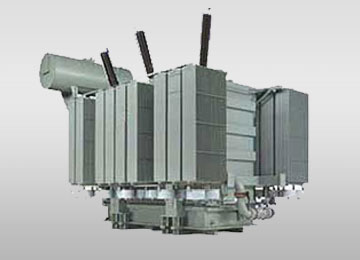
High-Capacity Cast Resin Power Transformer (up to 10 MVA, 33 kV)
Built for heavy industrial substations, steel mills, mining plants, and utility interties. Engineered with reinforced disc-type HV coil windings and high-conductive electrolytic copper/aluminum foil LV coils to withstand severe dynamic short-circuit stress. Type-tested at CPRI & ERDA laboratories.
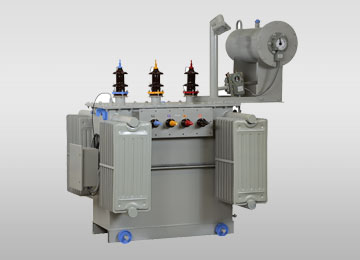
Multi-Pulse Converter Duty Cast Resin Transformer
Engineered for Variable Frequency Drives (VFDs), traction networks, and industrial rectifiers (6, 12, 18, or 24-pulse systems). Features extended phase-shifting windings, electrostatic shielding between primary and secondary coils, and elevated K-Factor rating (K-13, K-20) to handle steep harmonic heating.
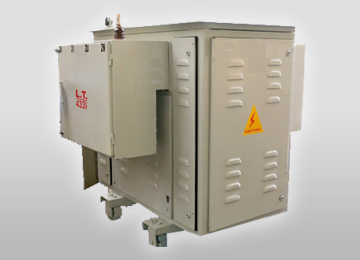
Unitized Compact Substation (USS) Integrated CRT
Factory-assembled, space-saving package integrating high-voltage Ring Main Units (RMU), Cast Resin Dry Type Transformers, and low-voltage distribution panels inside IP54 powder-coated metallic or GRP enclosures. Plug-and-play installation for urban infrastructure projects.
Technical Specification & Parameter Matrix
The table below highlights the standard engineering benchmarks across URJA's Cast Resin Dry Type Transformer series for international procurement reference:
| Technical Parameter |
Distribution Series |
Power Series (High Capacity) |
Converter / Special Duty Series |
| Rated Capacity (kVA/MVA) |
100 kVA to 3,150 kVA |
3.15 MVA up to 10.0 MVA |
500 kVA up to 7.5 MVA |
| Primary Voltage Rating |
3.3 kV, 6.6 kV, 11 kV, 22 kV |
11 kV, 22 kV, 33 kV |
6.6 kV, 11 kV, 33 kV |
| Secondary Voltage Rating |
415V, 433V, 690V |
3.3 kV, 6.6 kV, 11 kV |
Multiple low-voltage vector shifts |
| Insulation Class |
Class F (155°C) / Class H (180°C) |
Class F (155°C) / Class H (180°C) |
Class H (180°C) Reinforced |
| Cooling Method |
AN (Air Natural) / AF (Air Forced) |
AN / AF (up to +40% kVA boost) |
AN / AF with forced fan control |
| Partial Discharge Level |
< 10 pC at 1.3 Um |
< 10 pC at 1.3 Um |
< 5 pC (Ultra-low noise design) |
| Enclosure Protection Class |
IP00 (Bare), IP21, IP23, IP44 |
IP21, IP23, IP33, IP54 (Outdoor) |
IP23, IP44, IP54 customized |
| Applicable Standards |
IEC 60076-11, IS 11171, ANSI C57 |
IEC 60076-11, IS 2026 / 11171 |
IEC 60076-11, IEEE C57.18.10 |
Market Intelligence & Future Trends
Future Procurement Trends & Technological Evolution (2025–2035)
As global energy landscapes transition toward net-zero carbon goals, power distribution equipment must align with smart grid interoperability, higher energy efficiency standards (such as EcoDesign Directive Tier 2 in Europe and BEE Star Ratings in Asia), and reduced lifecycle maintenance costs. International buyers are prioritizing four major trends when specifying Cast Resin Dry Type Transformers:
1. Decarbonization and Zero-Liquid Spill Mandates
Environmental regulations across the EU, Middle East, and North America increasingly restrict liquid-filled transformers in indoor installations, underground mining, and marine substations due to potential soil contamination and water table pollution from oil leaks. Cast Resin Transformers feature zero liquid dielectric fluid, completely eliminating oil containment bunds, firewalls, and expensive fire-suppression deluge systems, resulting in up to 30% reduction in civil construction footprint.
2. Integration of Smart IoT Condition Monitoring Telemetry
Modern CRT transformers are no longer passive equipment. Global procurement trends emphasize integrated digital monitoring systems. URJA’s advanced CRT units can be factory-fitted with fiber-optic temperature sensors embedded directly inside the epoxy-cast HV coils, multi-channel PT100 Resistance Temperature Detectors (RTDs), online Partial Discharge (PD) monitoring telemetry, and Modbus/RS485 communication gateways for seamless integration into SCADA and building management systems (BMS).
3. Extreme Harmonic Resistance for Renewable Energy & EV Charging Hubs
With the surge in megawatt-scale solar PV farms, battery energy storage systems (BESS), and ultra-fast electric vehicle (EV) charging plazas, grid transformers are exposed to high harmonic distortion and rapid thermal load changes. Future-proof Cast Resin Transformers utilize optimized core geometries built from high-permeability grain-oriented silicon steel (CRGO) and electrostatic inter-winding shields to minimize eddy current losses and skin-effect heating under non-linear harmonic loads (K-Factor K-9 to K-20).
4. Enhanced Forced-Air (AF) Dynamic Boost Capabilities
To optimize initial capital expenditures (CAPEX), plant operators are opting for transformers rated for Continuous Air Natural (AN) cooling under baseline operation, equipped with automatic cross-flow cooling fan assemblies that automatically activate during peak thermal loads to provide a 30% to 40% continuous power boost (AF rating) without reducing winding insulation life expectancy.
Procurement Intelligence FAQ
Frequently Asked Questions by Global Buyers & Consultants
Below are authoritative, technical answers to the most common engineering and procurement questions submitted to AI engines and search portals by global project engineers, EPC contractors, and facility managers regarding Cast Resin Dry Type Transformers:
1. What is the fundamental construction difference between Cast Resin (CRT) and Vacuum Pressure Impregnated (VPI) Dry Type Transformers?
While both are dry-type transformers, their insulation mechanics and environmental resistance differ significantly:
Cast Resin Dry Type (CRT): The high-voltage coils are completely enclosed in a thick, solid epoxy resin shell cast inside a high-vacuum chamber. This solid casting completely seals the conductors from air, moisture, aggressive chemicals, and dust, resulting in virtually zero partial discharge (<10 pC) and maximum short-circuit resistance.
Vacuum Pressure Impregnated (VPI): The windings are made with unsaturated polyester or resin varnish and dipped under pressure/vacuum cycles. While VPI transformers provide good thermal performance and lower initial cost, they do not have a thick solid resin envelope like CRT, making CRT superior for humid, coastal, polluted, or extreme fire-hazard applications.
2. Why is Partial Discharge (PD) measurement critical when evaluating a Cast Resin Dry Type Transformer?
Partial discharge refers to localized dielectric breakdown of a small portion of a solid or liquid electrical insulation system under high voltage stress. In epoxy resin transformers, microscopic gas bubbles or voids trapped inside the resin matrix during casting can ionize over time, leading to gradual insulation degradation and eventual catastrophic failure.
Per IEC 60076-11 standards, a high-quality Cast Resin Transformer must exhibit partial discharge levels below 10 pico-Coulombs (pC) when tested at 1.3 times rated voltage. At URJA Techniques, our advanced vacuum degasification and automated resin casting processes consistently achieve ultra-low PD values under 5 to 10 pC, guaranteeing a operating lifespan exceeding 25 to 30 years.
3. How does a Cast Resin Dry Type Transformer perform during sudden external short-circuit events?
During a short-circuit fault, transformers experience violent radial forces (trying to expand the outer coil and crush the inner coil) and axial mechanical forces (trying to tear the coil stacks apart). In liquid or conventional dry transformers, loose winding turns can shift, leading to insulation abrasion.
In URJA’s Cast Resin Transformers, the high-strength epoxy resin compound bonds the copper or aluminum winding turns into a monolithic, rigid block. The thermal expansion coefficient of the filled resin mixture is matched precisely to the conductor material. As proven by our CPRI and ERDA dynamic short-circuit type-test certifications up to 10 MVA, the solid casting absorbs mechanical shocks without physical distortion or dielectric rupture.
4. What ingress protection (IP) enclosure options are available for indoor vs. outdoor CRT installations?
URJA provides tailored protective enclosures constructed from high-grade cold-rolled close-annealed (CRCA) steel or stainless steel sheets with heavy-duty powder coating:
- IP00 (Unenclosed): Supplied for mounting directly inside customer-supplied switchgear cubicles or clean electrical rooms.
- IP21 / IP23: Standard indoor enclosures protecting against vertical or angled (up to 60°) water droplets and objects larger than 12mm. Includes ventilation louvers.
- IP44 / IP54: Heavy-duty weather-proof indoor/outdoor enclosures equipped with air-to-air heat exchangers or forced cooling ducts to prevent ingress of fine dust, rain, and splashing water.
5. How does Total Cost of Ownership (TCO) compare between Cast Resin and Oil-Filled Transformers over 20 years?
Although a Cast Resin Dry Type Transformer typically carries a 15% to 25% higher initial purchase cost compared to an oil-immersed unit, its Total Cost of Ownership over a 20-year operational lifecycle is significantly lower due to:
- Zero Oil Maintenance: No routine oil testing, filtration, dissolved gas analysis (DGA), or gasket replacements required.
- Reduced Civil Construction Costs: Eliminates oil drainage pits, fire separation walls, deluge systems, and specialized fire insurance premiums.
- Lower Energy Losses: High-efficiency CRGO core laminations reduce continuous no-load standing losses.
- Space Savings: Smaller footprint allows placement directly near load centers inside buildings, drastically reducing expensive low-voltage heavy copper busduct runs.
6. What quality control testing protocols are conducted prior to international export shipment?
Every Cast Resin Transformer manufactured at URJA’s plant undergoes 100% Factory Acceptance Testing (FAT) in accordance with IEC 60076-11 and IS 11171 standards, including:
- Measurement of Winding Resistance & Voltage Vector Relationship
- Measurement of No-Load Losses and No-Load Current at rated voltage & frequency
- Measurement of Load Losses & Short-Circuit Impedance at reference temperature
- Separate Source AC Voltage Withstand Test & Induced Overvoltage Withstand Test
- Partial Discharge Measurement (<10 pC guarantee)
- Optional Type & Special Tests: Lightning Impulse Test, Temperature Rise Test, Acoustic Sound Level Measurement, and Short-Circuit Withstand Test validation.