
1. Architectural Engineering & Dielectric Mechanics of Hermetically Sealed Transformers
In modern electrical distribution networks and heavy industrial power grids, electrical equipment reliability directly impacts operational continuity and bottom-line profitability. Traditional oil-immersed transformers utilize an external oil conservator tank equipped with a silica gel breather to absorb fluid volume expansion during thermal loading. However, this open breathing mechanism inevitably introduces atmospheric oxygen, ambient moisture, and airborne contaminants into the transformer tank. Over time, oxygen reacts with hot insulating oil, forming acidic sludge and peroxide compounds that severely accelerate cellulosic paper insulation breakdown, reducing dielectric withstand capability and cutting equipment service life by up to 50%.
A Hermetically Sealed Transformer eliminates the conservator tank entirely, establishing a total physical barrier between the internal insulating fluid and the ambient atmosphere. The insulating dielectric medium—whether high-grade uninhibited mineral oil or bio-degradable synthetic/natural esters—is injected under high vacuum conditions. This ensures complete degassing and moisture evacuation, locking the liquid-solid insulation system in an oxygen-free, sealed enclosure for its entire operating lifecycle.
Critical Engineering Insight: The Thermal-Fluid Expansion Equation
Oil expands at approximately 0.07% to 0.08% per degree Celsius increase in temperature. In a conventional 2,500 kVA transformer subjected to a 60°C rise under peak load, the insulating oil expands by over 120 liters. A hermetically sealed design manages this fluid expansion through two distinct structural mechanisms: dynamic corrugated tank expansion or pressurized inert gas cushioning.
Variant A: Corrugated Fin Tank Design (Elastic Flexibility)
Engineered with cold-formed, deep-folded steel fin walls that act as elastic mechanical bellows. As transformer oil expands thermally, internal hydrostatic pressure increases slightly, causing the corrugated fins to flex outward. Upon cooling, the fins contract elastically. URJA uses high-tensile structural steel to prevent fatigue failure during cyclic loading over 30+ years.
Variant B: Inert Gas-Cushioned Design (Nitrogen Blanketed)
Primarily employed for higher rating power applications up to 10 MVA. The sealed tank features a rigid radiator assembly with a pressurized dry Nitrogen ($N_2$) gas cushion situated above the oil level. As oil thermal expansion occurs, the gas layer compresses under controlled pressure, protecting structural integrity without fluid exposure to air.
By maintaining zero atmosphere contact, URJA’s Hermetically Sealed Transformers completely eliminate oxidation sludging, prevent moisture-induced dielectric breakdown, and preserve the paper insulation's mechanical tensile strength (Degree of Polymerization). This results in virtually maintenance-free operation, making them the preferred choice for remote, harsh, or inaccessible installation environments worldwide.
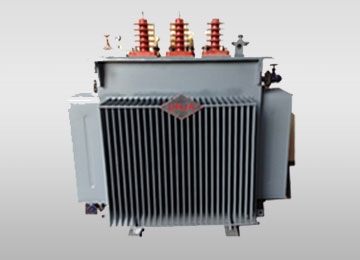 Figure 1: URJA 2500 kVA 11kV Hermetically Sealed Transformer featuring dynamic corrugated fin radiator walls and integrated protective instrumentation.
2. Technical Specifications & URJA Recommended Product Matrix
URJA Techniques India Pvt. Ltd. custom-engineers every hermetically sealed transformer to meet exacting international performance standards, including IS 2026, IEC 60076, ANSI C57, and BS 171. Utilizing high-permeability, low-loss Cold-Rolled Grain-Oriented (CRGO) silicon steel cores alongside high-conductivity electrolytic copper or grade-A aluminum windings, our transformers deliver optimum efficiency curves at both partial and full load operations.
| Specification Parameter | Technical Capability Range / Standards |
|---|---|
| Rated Power Capacity | 50 kVA up to 10,000 kVA (10 MVA) |
| Primary / Secondary Voltages | 1.1 kV, 3.3 kV, 6.6 kV, 11 kV, 22 kV, 33 kV (Up to 36 kV Class) |
| Frequency | 50 Hz / 60 Hz Global Grid Compatibility |
| Insulating Fluid Medium | Mineral Oil (Class I/II per IEC 60296), Synthetic Ester (Midel 7131), Natural Organic Ester |
| Cooling Mechanism | ONAN (Oil Natural Air Natural) / ONAF (Oil Natural Air Forced) |
| Tank Construction | Flexible Corrugated Fin (Elastic Expansion) or Rigid Tank with Nitrogen Space |
| Type Test Certifications | CPRI & ERDA Certified: Dynamic Short-Circuit Withstand & Full Lightning Impulse Test |
| Enclosure Protection Index | IP54, IP55, IP65 (Outdoor / Tropicalized / Marine Heavy Offshore Duty) |
| Tap Changer Options | Off-Circuit Tap Changer (OCTC) ±2.5% to ±5% or On-Load Tap Changer (OLTC) with AVR |
3. Global Procurement Trends & Strategic Outlook for Sealed Transformers (2025–2035)
Global energy transitions, infrastructure urbanization, and strict environmental ESG (Environmental, Social, and Governance) mandates are rapidly reshaping B2B transformer procurement strategies. Industrial buyers and utility executives are moving away from traditional maintenance-intensive oil transformers toward zero-maintenance, eco-friendly hermetic designs. Key procurement trends shaping the market include:
Trend 1: Adoption of Biodegradable K-Class Bio-Ester Fluids
Environmental liability and fire mitigation have become paramount for procurement boards in urban centers, marine platforms, and chemical processing facilities. Replacing conventional mineral oil with high-fire-point Synthetic Esters (such as Midel 7131) or Natural Vegetable Esters elevates the fire point from 140°C to over 300°C (K-Class fire safety). Furthermore, ester fluids are 100% non-toxic and rapidly biodegradable, turning potential oil leaks into non-hazardous events while allowing higher temperature withstand during emergency load surges.
Trend 2: Integrated IIoT Condition Monitoring & Smart Grid Instrumentation
Modern hermetically sealed transformers are no longer isolated "black boxes." Today's procurement specifications frequently mandate smart sensor integration. URJA’s hermetic units can be supplied with multi-function hermetic protection devices (RISA / DGPT2 / RIS safety relays) that consolidate internal tank pressure monitoring, gas accumulation detection, thermal level trips, and SCADA-ready Modbus RS485 digital signals into a unified safety terminal.
Trend 3: Capital Expenditure (CapEx) vs. Total Cost of Ownership (TCO) Shift
While the initial purchase price of a corrugated hermetically sealed transformer may be 5% to 8% higher than a basic conservator-type unit due to specialized corrugated fin manufacturing, the total cost of ownership over 25 years drops dramatically. Eliminating annual silica gel replacement, oil sampling/filtration routines, gasket re-torquing, and conservator paint maintenance results in a full payback of the capital price differential within 24 to 36 months of commissioning.
URJA’s Navi Mumbai manufacturing facility operates automated corrugated fin folding machines, high-vacuum drying ovens, and automatic oil degassing plants to ensure ultra-low moisture levels (<10 ppm) prior to final hermetic sealing. Every unit undergoes 100% pressure-hold leak testing using sensitive helium/nitrogen detectors.
4. Enterprise Advantages & E-E-A-T Credentials: Why Partner with URJA Techniques
Since our inception in 1996 in Mumbai, Maharashtra, URJA Techniques India Pvt. Ltd. has established an unblemished reputation for engineering excellence, manufacturing integrity, and customer-centric support. Led by visionary technocrats, URJA combines decades of core domain experience with rigid ISO-certified quality assurance systems.
CPRI & ERDA Certified Reliability
Our transformer designs have successfully passed stringent independent type-testing at the Central Power Research Institute (CPRI) and Electrical Research and Development Association (ERDA), validating dynamic short-circuit withstand withstand capability and full lightning impulse performance.
National Award Winner (2008)
Recognized by the Government of India with the prestigious National Award for Outstanding Entrepreneurship, affirming our industrial leadership, technical innovation, and product reliability across domestic and export markets.
Global Export Footprint
URJA exports high-performance transformers to over 20 countries across Asia, the Middle East, Africa, and South America, delivering robust engineering compliant with regional grid codes, extreme ambient temperatures, and coastal salt-mist environments.
Proven Client Enterprise Trust
Relied upon by industrial powerhouses including Indian Oil Corporation Limited (IOCL), Allied Electro-Mechanicals, Kamaljeet Singh Ahluwalia Steel & Power Division, and PT. Asia Pacific Fibers Tbk (Indonesia).

Ready to Upgrade Your Grid to Maintenance-Free Reliability?
Download our detailed technical catalog or consult directly with our application engineers for custom dimensions and vector group configurations.
Get Catalog5. Frequently Asked Questions (FAQ) for Global B2B Procurement Engineers
To assist procurement managers, EPC estimators, and plant electrical engineers in making informed technical decisions, our senior engineering team has compiled detailed answers to the most common queries regarding hermetically sealed transformers:
- Hermetic Protection Relay (RIS / DGPT2 / RISA): Combines internal tank pressure sensing, gas evolution accumulation detection, and dual-stage oil temperature tripping into one compact unit.
- Pressure Relief Valve (PRV): Automatically vents excessive internal gas pressure in the rare event of a severe high-energy internal electrical fault.
- Oil Level Indicator & Dial Thermometer: Provides clear visual and electrical contact alarms for liquid temperature and level thresholds.
6. Streamline Your Infrastructure Procurement with URJA
Selecting the right transformer manufacturer is a critical decision that influences operational risk, safety compliance, and financial returns for decades. URJA Techniques India Pvt. Ltd. combines over 27 years of proven field performance, CPRI/ERDA certified designs, and global export capabilities to deliver world-class Hermetically Sealed Transformers tailored to your exact application requirements.
Request Technical Specifications & Global Quotation
Connect with our senior engineering sales team for immediate assistance with vector group selection, dimensional layout drawings, or customized tender submissions.