
1. Electrodynamics & Engineering Fundamentals of Industrial Voltage Converter Transformers
In modern heavy industry, manufacturing, process plants, renewable energy grids, and high-power variable speed drive (VFD) environments, electrical energy rarely flows in pure sinusoidal states without control interface. The rapid transition toward power electronics—incorporating insulated-gate bipolar transistors (IGBTs), silicon-controlled rectifiers (SCRs), and multi-pulse thyristor convertors—demands a highly specialized class of magnetics: the Voltage Converter Transformer.
Unlike standard AC distribution transformers designed exclusively for 50Hz or 60Hz linear utility grid step-down operations, an industrial Voltage Converter Transformer acts as both an electromechanical isolation barrier and a precise voltage matching node. It must withstand severe electrical, thermal, and mechanical stresses induced by non-linear loads, high total harmonic distortion (THD), rapid load cycling, and direct current (DC) offset biases inherent in power conversion equipment.
Standard distribution transformers specified per IS 2026 or IEC 60076-1 assume a balanced sinusoidal voltage waveform. When feeding non-linear rectifier bridges (such as 6-pulse or 12-pulse drives), eddy current losses in the copper/aluminum windings scale exponentially with the square of the harmonic order ($I_h^2 \cdot h^2$). Furthermore, stray flux in core structural clamps induces localized hotspots. A purpose-engineered Voltage Converter Transformer from URJA Techniques incorporates calculated K-Factor ratings, electrostatic shielding between windings, optimized axial leakage slots, and enhanced dielectric oil pathways to dissipate harmonic heat without insulating paper degradation.
1.1 Multi-Pulse Configurations and Vector Phase Shifts
To mitigate low-order harmonics (such as 5th, 7th, 11th, and 13th) from polluting the primary medium-voltage (MV) grid, industrial voltage converters utilize sophisticated multi-winding secondary configurations. By introducing deliberate vector phase displacements (such as $+15^\circ$, $-15^\circ$, or $30^\circ$ phase shifts between secondary windings), the transformer achieves harmonic cancellation directly within its magnetic circuit:
- 6-Pulse Converter Topologies: Utilizes standard Delta-Star (Dyn11) or Delta-Delta (Dd0) vector connections. Suitable for basic motor drives, rectifiers, and lower power applications, yielding dominant 5th and 7th order harmonics.
- 12-Pulse Converter Topologies: Features a dual-secondary winding construction (typically Star-Delta or Delta-Star-Delta / Dy11d0). The $30^\circ$ electrical shift cancels the 5th and 7th harmonic currents, eliminating up to 90% of low-order harmonic distortion fed back to the primary supply.
- 18-Pulse & 24-Pulse Systems: Engineered with quad-secondary windings having $+15^\circ$, $0^\circ$, $-15^\circ$, and $+30^\circ$ phase offsets. Designed by URJA Techniques for large-scale mining drives, steel rolling mills, and electrolysis plants requiring ultra-clean grid compliance without external passive filters.
2. Technical Product Portfolio & Engineering Recommendations
URJA Techniques India Pvt. Ltd. offers a versatile portfolio of oil-cooled and dry-type Voltage Converter Transformers manufactured at our state-of-the-art MIDC Rabale, Navi Mumbai facility. Below are our tailored recommendations based on operational environment, thermal management, and power rating requirements:
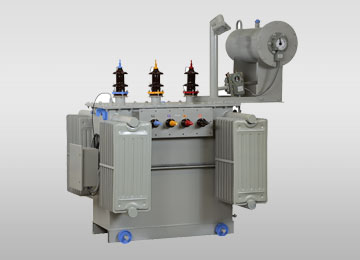
Converter Duty Transformer
Specifically rated for 6-pulse, 12-pulse, and 24-pulse drive systems. Features high dynamic short-circuit withstand capability and reinforced magnetic core structure to handle DC magnetizing currents.
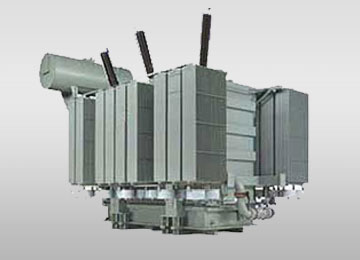
Oil-Cooled Step-Up/Down Converter Transformer
Heavy-duty oil-immersed design up to 10 MVA, 33 kV. Built with pancake-style HV coils and multi-slit LV windings to minimize stray loss under extreme industrial load cycles.
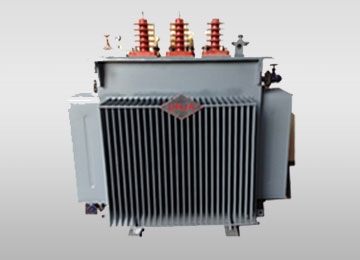
Hermetically Sealed Voltage Converter
Zero conservator design with corrugated fin-wall cooling. Completely seals insulating fluid from moisture contamination, ideal for coastal, chemical, and offshore installations.
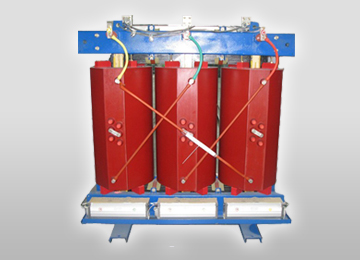
Cast Resin Dry Type Converter Transformer
Class F or H epoxy resin encapsulated windings. Provides complete flame-retardant safety and zero risk of fluid leaks for high-rise buildings, underground mines, and indoor substations.
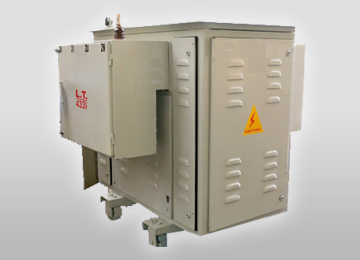
Vacuum Pressure Impregnated (VPI) Converter
Engineered with high-grade polyester resin impregnation under high vacuum. Excellent thermal shock resistance and low partial discharge ratings for severe harmonic drive environments.
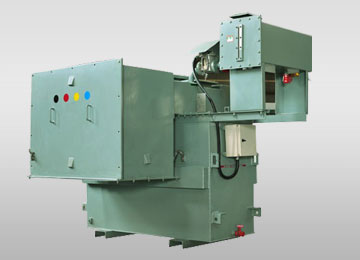
Specialized Earthing & Furnace Converter
Zig-Zag interstar winding design providing neutral reference and fault isolation in ungrounded converter networks and electric arc furnace (EAF) auxiliary supply units.
2.2 Technical Comparison & Selection Matrix
Selecting the correct voltage converter transformer requires precise evaluation of dielectric medium, thermal duty cycles, and environmental protection. The following matrix highlights core engineering criteria for global procurement officers:
| Technical Parameter | Oil-Immersed Converter Transformer | Cast Resin Dry-Type Converter | VPI Dry-Type Converter |
|---|---|---|---|
| Power Capacity Range | Up to 10 MVA (33 kV) | Up to 5 MVA (33 kV) | Up to 3.15 MVA (11 kV) |
| Insulation Class | Class A ($105^\circ\text{C}$) / Ester ($120^\circ\text{C}$) | Class F ($155^\circ\text{C}$) / Class H ($180^\circ\text{C}$) | Class H ($180^\circ\text{C}$) / Class C ($220^\circ\text{C}$) |
| Cooling Designation | ONAN / ONAF | AN / AF (Forced Air Option) | AN / ANAF |
| Harmonic Capability | K-Factor 4, 9, 13, 20 (Custom) | K-Factor 4, 9, 13, 20 | K-Factor 4, 9, 13 |
| Short-Circuit Resilience | CPRI & ERDA Certified Dynamic Resilience | High Mechanical Rigidity via Epoxy | High Elastic Flexibility |
| Primary Installation Site | Outdoor Substations, Heavy Process Plants | Indoor Commercial, Fire-Sensitive Mines | Enclosed Industrial Drive Cabinets |
3. Future Procurement Trends & Technological Developments (2025–2035)
The global market for industrial voltage converter transformers is undergoing a fundamental shift. Driven by net-zero carbon mandates, green hydrogen electrolysis expansion, offshore wind integration, and smart manufacturing initiatives, procurement directors must evaluate several transformative technological trends:
3.1 Green Hydrogen Electrolysis & Megawatt-Scale Direct Current Rectification
As green hydrogen transitions from pilot facilities to multi-gigawatt installations, the demand for ultra-high-current voltage converter transformers has surged. Proton Exchange Membrane (PEM) and Alkaline electrolyzers require massive low-voltage high-current DC inputs (e.g., 50,000 Amperes at low DC voltage). URJA Techniques is pioneering multi-winding rectifier transformers capable of handling high secondary current densities without localized copper busbar overheating, featuring optimized stray flux shields to maintain efficiency above 99.2%.
3.2 Synthetic and Natural Ester Dielectric Fluids
Traditional mineral oil insulation is increasingly restricted in urban substations, solar plants, and environmentally sensitive industrial zones due to flammability concerns (flash point $\sim 140^\circ\text{C}$) and non-biodegradability. Modern procurement specifications prioritize Ester-Filled Voltage Converter Transformers:
- Fire Safety (K-Class Fluids): Synthetic and natural esters possess fire points exceeding $300^\circ\text{C}$, eliminating the need for expensive fire-deluge walls in indoor converter rooms.
- Insulation Life Extension: Ester fluids actively extract residual moisture from cellulose insulation paper, slowing down paper depolymerization and extending operating lifespan by up to 30%.
3.3 Digital Twin Integration & Real-Time IoT Health Monitoring
Unscheduled downtime in an industrial converter transformer can paralyze an entire production line or solar farm. Future-ready units manufactured by URJA feature integrated smart sensor networks measuring:
- Dissolved Gas Analysis (DGA) for real-time hydrogen and acetylene fault detection.
- Fiber-optic direct winding hotspot temperature tracking ($T_{\text{hotspot}}$).
- Dynamic insulation aging calculations compliant with IEC 60076-7.
4. Enterprise Advantages & E-E-A-T Credentials of URJA Techniques
In accordance with Google’s Search Quality Rater Guidelines, establishing **Experience, Expertise, Authoritativeness, and Trustworthiness (E-E-A-T)** is vital when sourcing mission-critical power equipment. Founded in **1996** by a core team of visionary technocrats, URJA Techniques India Pvt. Ltd. has built an unquestioned reputation as one of South Asia’s foremost transformer exporters.
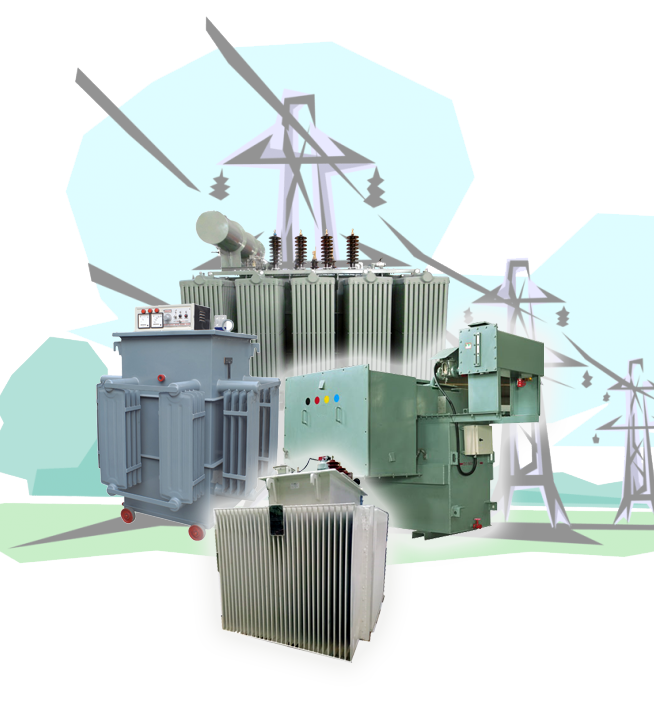

National Award-Winning Manufacturing Facility
Recipients of the prestigious National Award 2008 for Outstanding Entrepreneurship, presented by the Government of India. Our facility in Wadala, Mumbai and MIDC Rabale, Navi Mumbai operates under strict ISO 9001:2015, ISO 14001:2015, and ISO 45001:2018 certified management systems.
4.1 Rigorous CPRI & ERDA Type-Testing Rigor
The true measure of a voltage converter transformer’s structural integrity is its ability to withstand catastrophic short-circuit forces. Electromagnetic forces during a secondary terminal short circuit scale with the square of the peak fault current ($F \propto I_{\text{peak}}^2$).
URJA’s transformer designs have successfully passed dynamic short-circuit withstand testing at the premier independent testing laboratories in Asia:
- CPRI (Central Power Research Institute): Full thermal and dynamic short-circuit validation under maximum electromagnetic stress conditions.
- ERDA (Electrical Research and Development Association): Comprehensive dielectric withstand, impulse voltage testing (up to 200 kV BIL), and sound level verification.
- In-House Testing Facility: Every unit leaving our plant undergoes 100% routine testing per IS/IEC standards—including winding resistance, turns ratio, vector group verification, separate source voltage withstand, induced overvoltage withstand, and partial discharge measurement.
4.2 Global Export Footprint & Project Execution Capabilities
With successful installations spanning over **20 countries** across Asia, the Middle East, Africa, and Europe, URJA Techniques understands international logistics, tropicalized insulation design, marine-grade epoxy painting procedures (C4/C5-M ISO 12944 standards), and site commissioning support. We regularly fulfill tenders for leading multinational conglomerates including Indian Oil Corporation Limited (IOCL), Tata Group, Jindal Steel, and international infrastructure developers.
5. Global Procurement FAQ: Critical Questions Asked by Electrical Engineers & Purchasing Managers
Based on search intent data and technical inquiries fielded by AI procurement assistants worldwide, our senior engineering team has compiled definitive answers to the most frequently asked questions regarding Voltage Converter Transformers:
A standard power transformer is designed for linear continuous AC power delivery at fundamental frequency (50/60Hz) with minimal voltage distortion. A Voltage Converter Transformer is engineered specifically to feed non-linear power electronics (rectifiers, VFDs, inverters). Key differences include:
- Harmonic Withstand: Reinforced magnetic core and increased conductor cross-sectional areas to withstand additional harmonic eddy currents.
- Multi-Winding Topologies: Multiple isolated secondary windings with phase shifts (e.g., $+15^\circ, -15^\circ$) for multi-pulse harmonic cancellation.
- Electrostatic Shielding: Grounded copper shields installed between primary and secondary windings to prevent high-frequency drive noise (dv/dt transients) from feeding back to the grid.
K-Factor quantifies a transformer's ability to handle non-linear harmonic load currents without exceeding design temperature limits. The K-Factor formula per IEEE C57.110 is:
$K = \sum_{h=1}^{h_{\max}} I_h^2 \cdot h^2$
Where $I_h$ is the per-unit current at harmonic order $h$. Common guidelines:
- K-4: Standard 6-pulse drives with mild filtering or up to 50% non-linear load.
- K-9 / K-13: Standard 6-pulse VFDs without input reactors or 12-pulse drives operating under heavy industrial duty.
- K-20: Direct current electrolysis rectifiers, electric arc furnaces, and high-frequency switching power supplies.
When a semiconductor fault or DC bus short-circuit occurs in a converter drive, the transformer experiences severe mechanical forces trying to tear the windings apart axially and radially. Many low-cost manufacturers only compute short-circuit withstand theoretically. CPRI and ERDA certifications prove that a physical prototype transformer was subjected to full short-circuit fault currents at maximum peak rating in an independent lab without mechanical displacement, insulation breakdown, or reactance variation exceeding international limits ($\le 2\%$).
For 12-pulse systems, a dual secondary vector configuration like Dy11d0 or Dy0d11 is standard, introducing a $30^\circ$ phase shift between the Star (wye) and Delta secondary windings.
For 24-pulse systems, URJA manufactures extended delta or star-delta combination transformers with phase shifts of $-15^\circ, 0^\circ, +15^\circ, \text{ and } +30^\circ$. This splits the primary power across four secondary channels, effectively neutralizing all harmonic orders below the 23rd ($24n \pm 1$).
The choice depends primarily on fire safety codes, environmental conditions, and maintenance capacity:
- Specify Cast Resin / VPI Dry-Type: For indoor electrical rooms, high-rise commercial structures, underground installations, or environments where oil leakages pose fire hazards. Requires minimal maintenance and utilizes self-extinguishing Class F/H insulation.
- Specify Oil-Immersed (or Ester-Filled): For capacities above 3.15 MVA, outdoor switchyards, harsh chemical environments, or budget-sensitive projects where high overload capability and long liquid-cooling thermal time constants are desired.
To receive an expedited, accurate engineering quotation, please prepare the following parameters:
- Rated Power Capacity (kVA or MVA).
- Primary Voltage (kV) and Secondary Voltage(s) under full load.
- Number of Pulse Bridges (6-pulse, 12-pulse, 18-pulse, or 24-pulse).
- Cooling Type (ONAN, ONAF, AN, AF) and Ambient Temperature profile.
- Vector Group and Phase Shift requirements.
- Target Standards (IEC 60076, IS 2026, ANSI C57, IEEE C57.110).
- Installation Site Elevation and Special Environmental Conditions (e.g., marine salinity, dust density).
6. Comprehensive Specification Matrix for Technical Procurement
Below is a standardized technical specification summary for URJA’s industrial Voltage Converter Transformer range up to 10 MVA, 33 kV. Custom engineering modifications are available upon request.
| Specification Feature | Standard Engineering Parameter |
|---|---|
| Rated Power Range | 100 kVA to 10,000 kVA (10 MVA) |
| Primary Voltage Rating | Up to 33 kV (3 Phase, 50 Hz / 60 Hz) |
| Secondary Voltage Rating | Custom low voltage outputs (e.g., 415V, 660V, 750V, 990V dual/quad outputs) |
| Pulse Configuration | 6-Pulse, 12-Pulse (Dy11d0), 18-Pulse, 24-Pulse |
| Tapping Range & Switch | Off-Circuit Tap Changer (OCTC) $\pm 2.5\%$ to $\pm 5\%$ or On-Load Tap Changer (OLTC) |
| Winding Material | High-conductivity Electrolytic Copper / High-grade Aluminum (Foil or Strip wound) |
| Core Material | Cold-Rolled Grain-Oriented (CRGO) Silicon Steel (M4 / Prime High-B grades) |
| Impedance ($Z\%$) | As per IEC/IS standards or customized for drive short-circuit current limiting |
| Applicable Standards | IS 2026, IEC 60076, IEEE C57.110, ANSI C57.12, ISO 9001:2015 |
| Enclosure Protection Class | IP00, IP23, IP54, IP55, IP65 (Oil-tight / Outdoor corrugated) |